Ribadeo to Lourenza: 18 miles, 3K elevation gain… I thought I left the mountains behind!
I started this very difficult day with no coffee. I sought my morning motivation from the contrasting smells: eucalyptus and cow manure. I had learned from The Camino Podcast that eucalyptus is invasive to Galicia. They are pretty and emit a welcoming smell, but they pose a huge risk to worsening fires. They were previously planted to boost the timber and paper industries in a region that maintained a high portion of small-scale landholdings, traditional villages, and higher than average emigration since the 18th century. Shipbuilding and fishing were staples for Galicia like the Basque region, and with tough farming land, the region capitalized on corn following the Columbian Exchange. The homes in these isolated hamlets most often include elevated grain storage houses. These hórreos have become a symbol of the typical Galician farm and populate the whole region, as are rows of corn. The walking in Galicia was generally less exciting, there were long, more gradual uphills, too often on pavement and sometimes gravel, but some forests dotted the trails with shade. The heat increased since we moved inland and south.
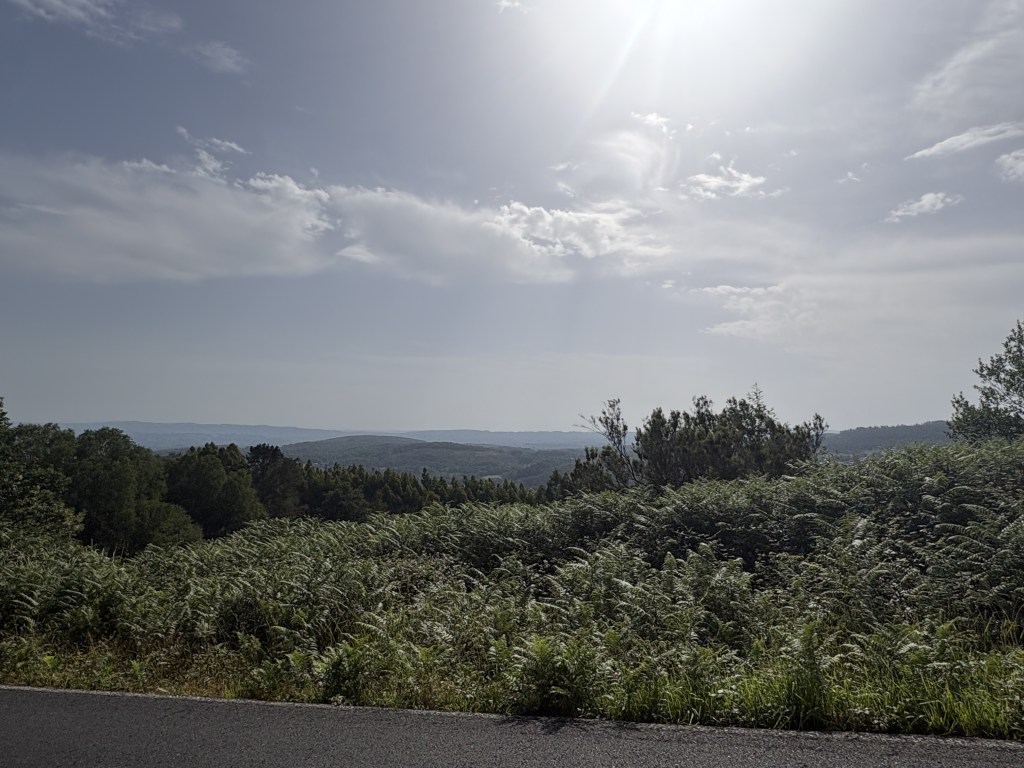
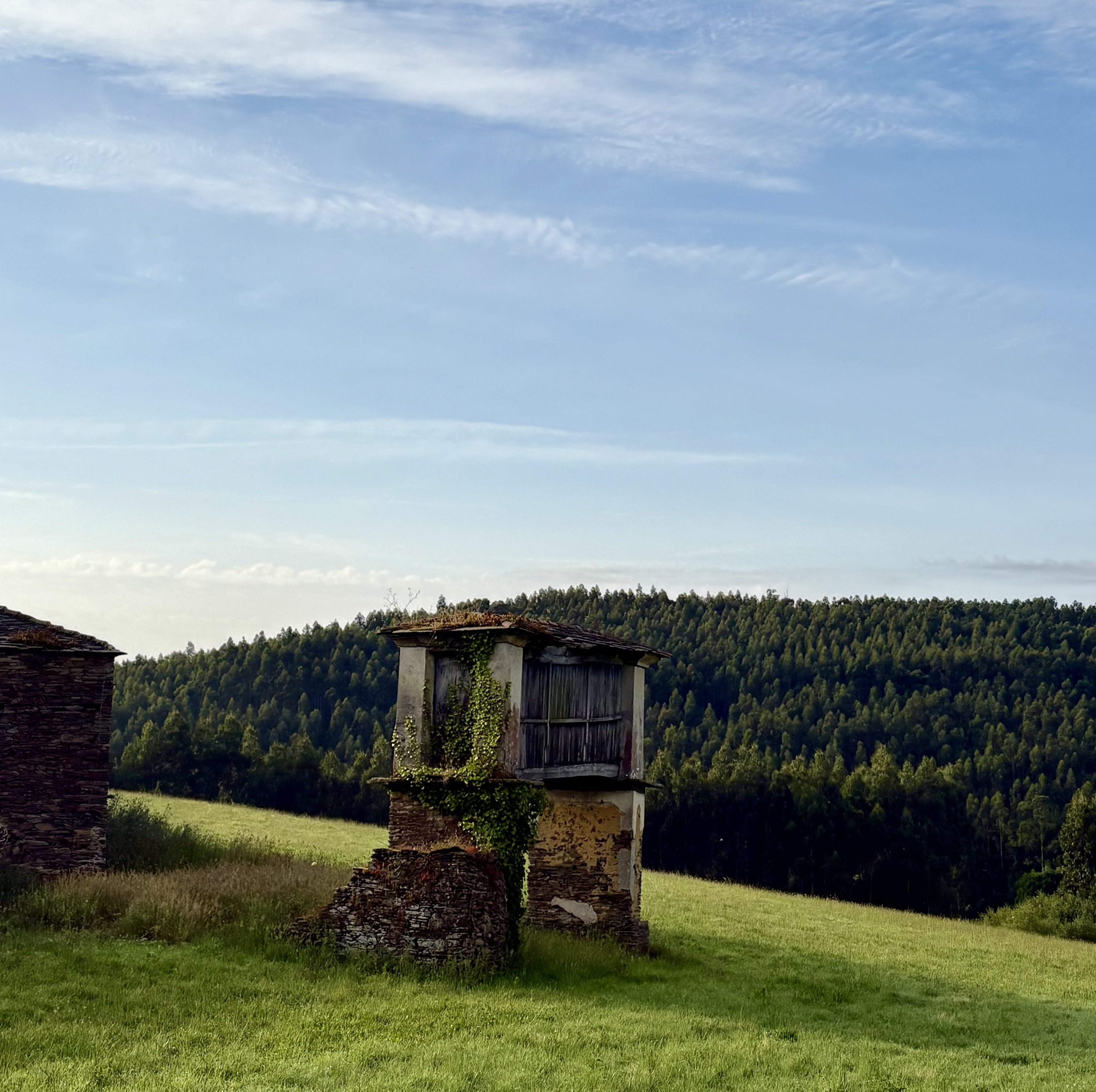
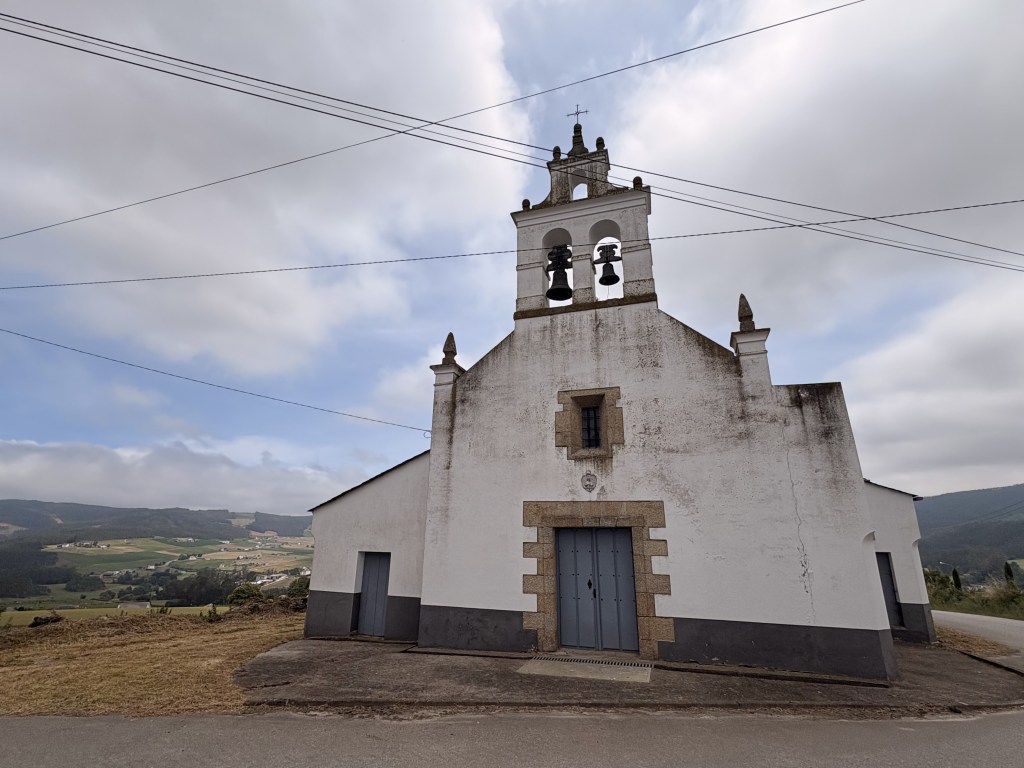
I didn’t reach a town until eleven and it took until noon to be able to down my first coffee and proper meal in Vilamartín Grande. It was in this small barrio (Vilamartín Pequeno) that I heard bagpipes! There were festivities taking place outside a church. Bagpipes really are a local tradition in Galicia. I would hear them again entering Santiago, but that, of course, caters to visitors’ piqued curiosity with Celtic culture. Today I passed several chapels from the 1600s and none had their doors open. The areas I walked were pretty desolate, and I walked by many ruined homes and structures.
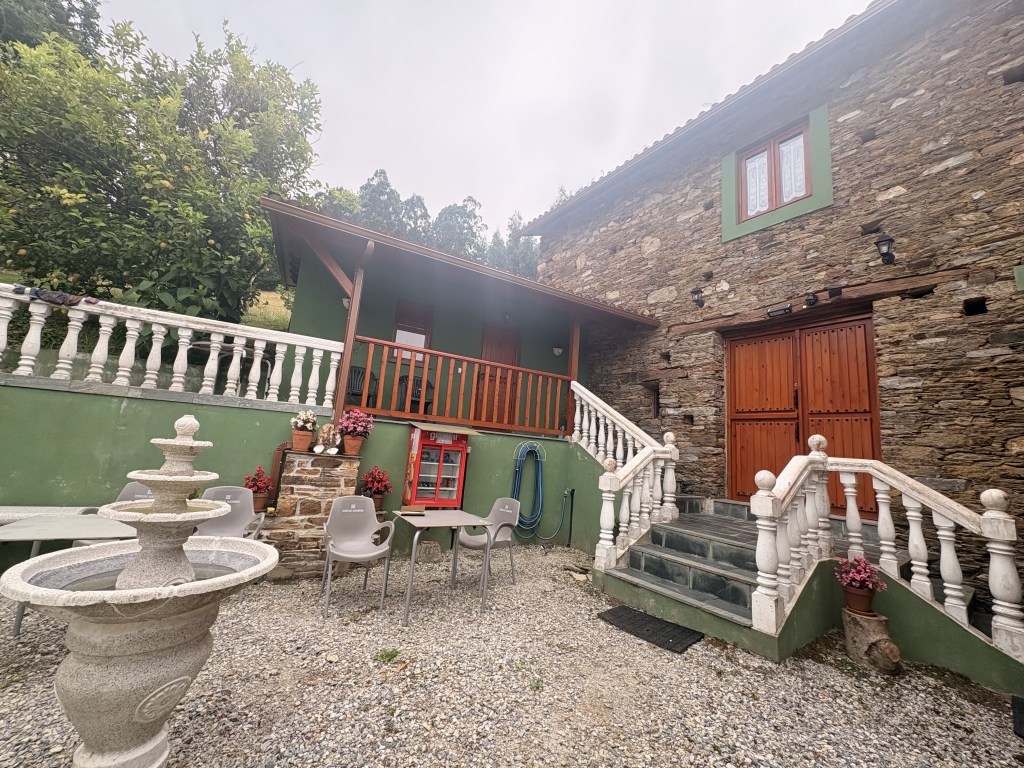
I arrived in Lourenza, but I had booked a room at a bed and breakfast a couple of miles outside of town with great reviews. I called my host, and he picked me up in an old truck. Carlos was very nice and we only spoke Spanish. I was his only guest that night. He was so hospitable, catering to all of my meal preferences. He prepared a large dinner (bacalao or cod) with dessert (a thick slice of manchego cheese with a firm sliver of jam or jelly on top) and the next morning the largest breakfast I had had on the camino. He talked about his parents. His mother, in her 80s, still does housework on the property and his father, who passed away a few years prior. He was very sentimental when talking about them and I saw pictures and momentos that gave thanks to them for helping Carlos fulfill his dream of starting this hotel. We also talked about tourists. He said Spaniards are the worst and he hosts maybe 10 Americans a year. He was eager, with a curious smile, to ask me about Native Americans. He wanted to know if they hunt like in the films. I gave the best response I could. Carlos dropped me back onto the camino the next morning.
Lourenza to Abadín: 16 miles
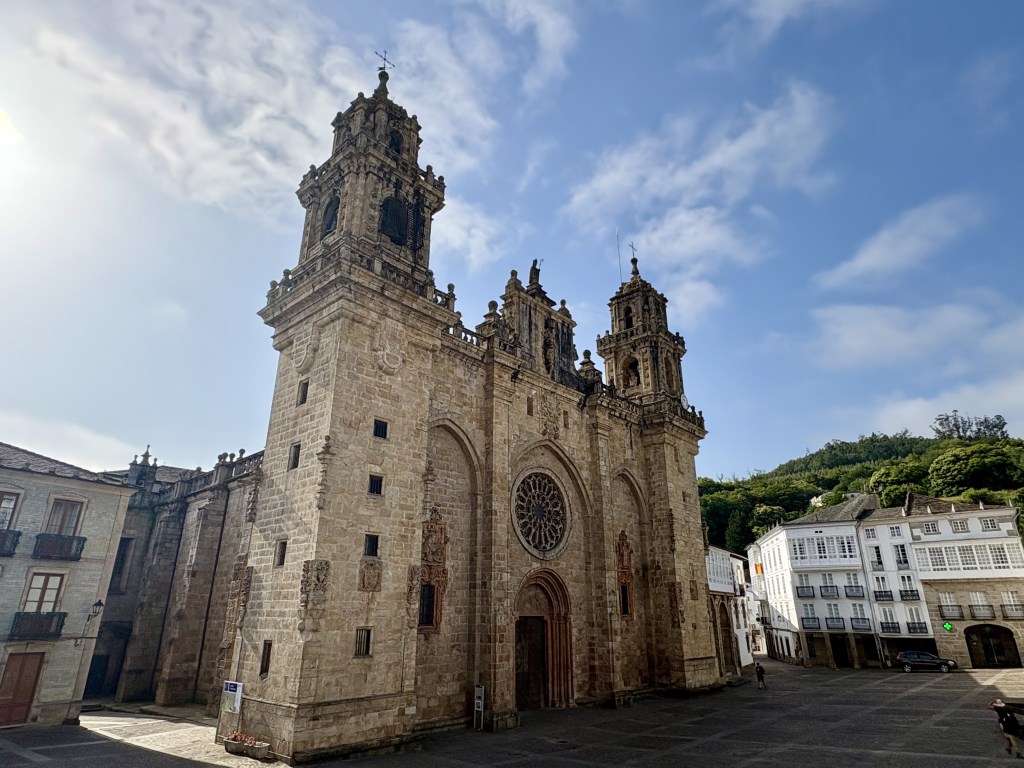
I had a couple of easy walking hours from where Carlos dropped me off before reaching Mondoñedo. The monastery wasn’t open, but many pilgrims were stationed at the cafe off the main square. I talked with a couple of groups. Three young women from the U.S. had just finished their contract teaching English in Oviedo. They were very sad to be heading home soon. I would run into them a few times, they were very sweet, and I was happy to be able to congratulate them in Santiago after we all completed our caminos. Then I met a pair of friend, a woman from Canada and a man living in Zaragoza but from Nicaragua; he had lived in Canada where the two worked together and became great friends. I would become good pals with them for the rest of the trip. Having repeated interactions with the same people, developing bonds, really helped with motivation. I walked a bit with them out of town. We were trying to find the harder route that culminates in beautiful views, but I followed my new friends, who didn’t lead us that way. I should have followed my Alltrails app, but I had been solo for so long. It still wasn’t an easy day, so I tried to appreciate the route sans views.
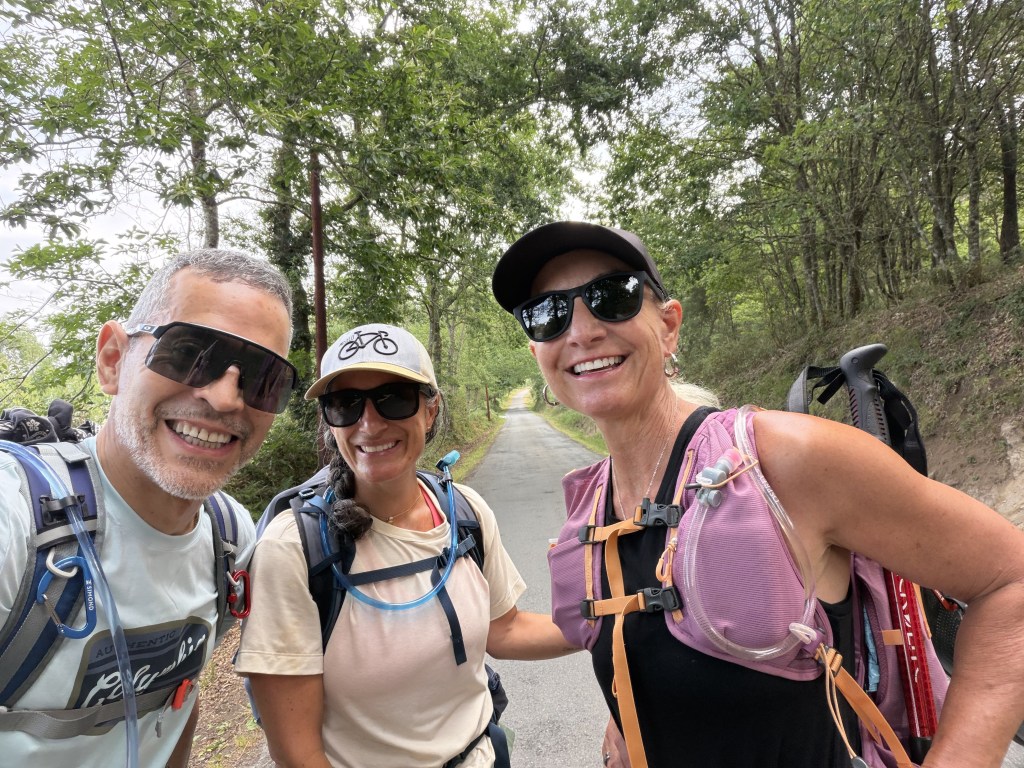
About 45 minutes out from Abadín I started walking with two women: one from New Zealand and another woman who was living in the UK but from Minnesota and training to be a Lutheran pastor. The pastor hadn’t experienced much of Spain and didn’t know much history. It was fun talking to her about my knowledge of Basque, the Spanish Civil War, the Franco era. She told me that they stopped at the small, eccentric house I saw along the walk that day. I should have stopped but was in a slog of wanting to get past the difficult part. This would happen from time to time. You have to weigh your discomfort with opportunities for better views, interesting sites, meeting local people, etc. The woman who owned the home sells art and small trinkets to hikers. She may have had coffee too. In Galicia, I would find many of these sites of motivation!
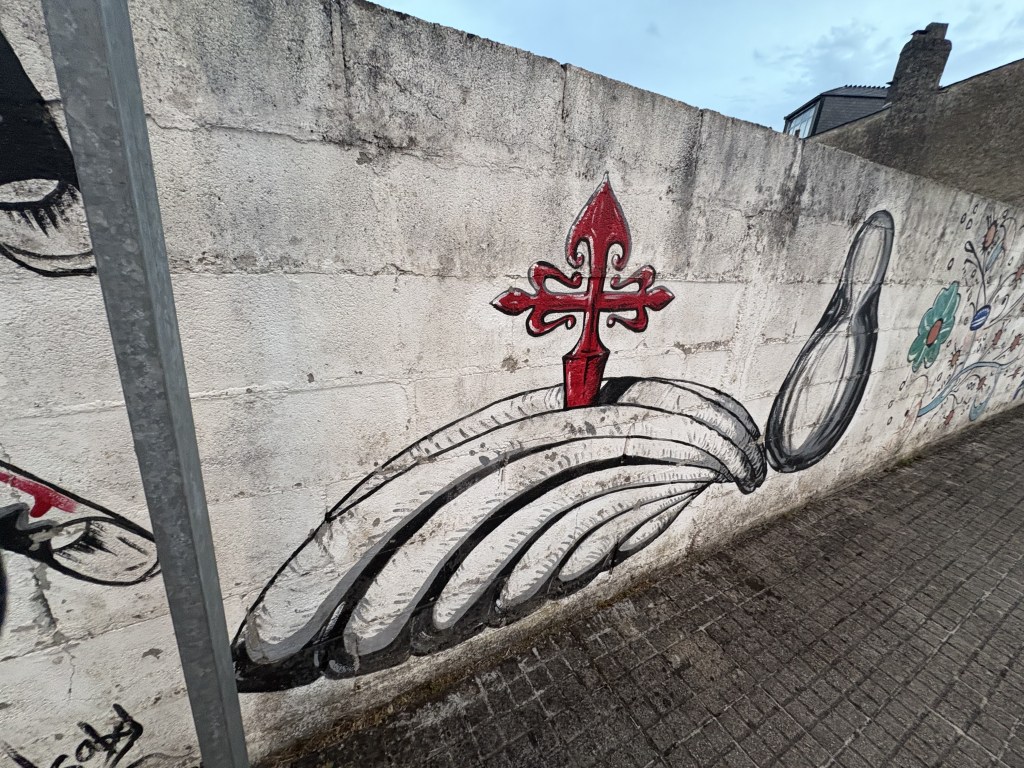
Friends and I met for dinner that evening while Spain played a World Cup game. It was a lot of fun, we shared various dishes and bonded. Abadín was very small, and although I had a private room, it was attached to the shared dorm albergue, so it was nice to feel a bit of communalism. The town felt like mostly pilgrims anyways, with one bar and one restaurant. We were served traditional tapas here, each drink came with a satisfying small plate.
Abadín to Vilalba: 13 miles
It was a nice cool morning out of Abadin but pretty unremarkable. The last three miles were tough, however, as they always are. The boredom sank in, making my feet feel even more achy. I met a couple more camino motivators today. One was a very dirty but playful farm dog who jumped all over me and left me smelly. Another was a man sitting with carved trinkets, a donation dish laid out. He lured me into conversation. He had long hair and a calm demeanor. He asked how I was and when I responded with my aches and pain, what I caught from his response in Spanish was that these are manifestations of emotional states, inherited energies maybe from the feminine and masculine or mother and father. When he would ask me something and I would respond, he completely rolled his eyes to the back of his head before responding with something profound. He said his body was from the area but his soul, well it was from everywhere, or he couldn’t know. It was an interesting encounter. I thought about donating, I am sure he has perfected his routine while also being genuinely interested in talking to pilgrims for some spiritual purpose, but I had nothing handy and wanted to continue walking so I left him. Total coincidence, but as soon as I started walking again, a powerful breeze moved through the forest and train. It was quite cooling and peaceful at that moment. What his intention or authenticity is, the encounter mixed up the monotony of walking solo and hot. It provided me with some curiosity that gave me another boost of motivation and energy.
In Vilalba, I stayed at the Parador. There are many of these hotels which are renovated old castles turned prisons during the Franco era. In bigger cities the paradores are likely much nicer and impressive. Vilalba is not a small town, but still felt sleepy and the hotel dated and muted. I had octopus (pulpo á feira), traditional in Galicia. The food in these towns have been very salty. My foot would swell up uncomfortably at dinnertime.
Vilalba to Parga: 18 miles
Today’s walk was going to be a bit boring again, so it’s the first and only day I played two hours of music. It was interesting experiencing music after so many days of walking in silence or just with nature. You really realize the emotional pull particular music can inspire, place itself on the landscape and scenes. I got another big dose of motivation from a donativo “shop” and a girl who was passing handwritten notes of inspiration to pilgrims in front of her home. I nearly cried.
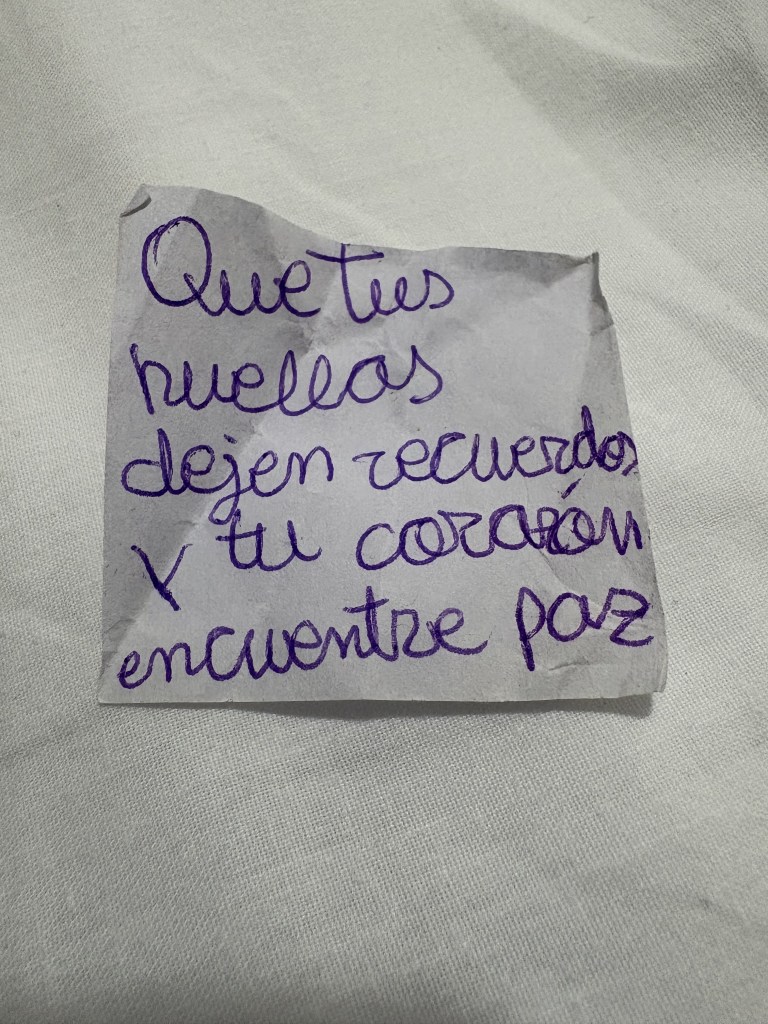

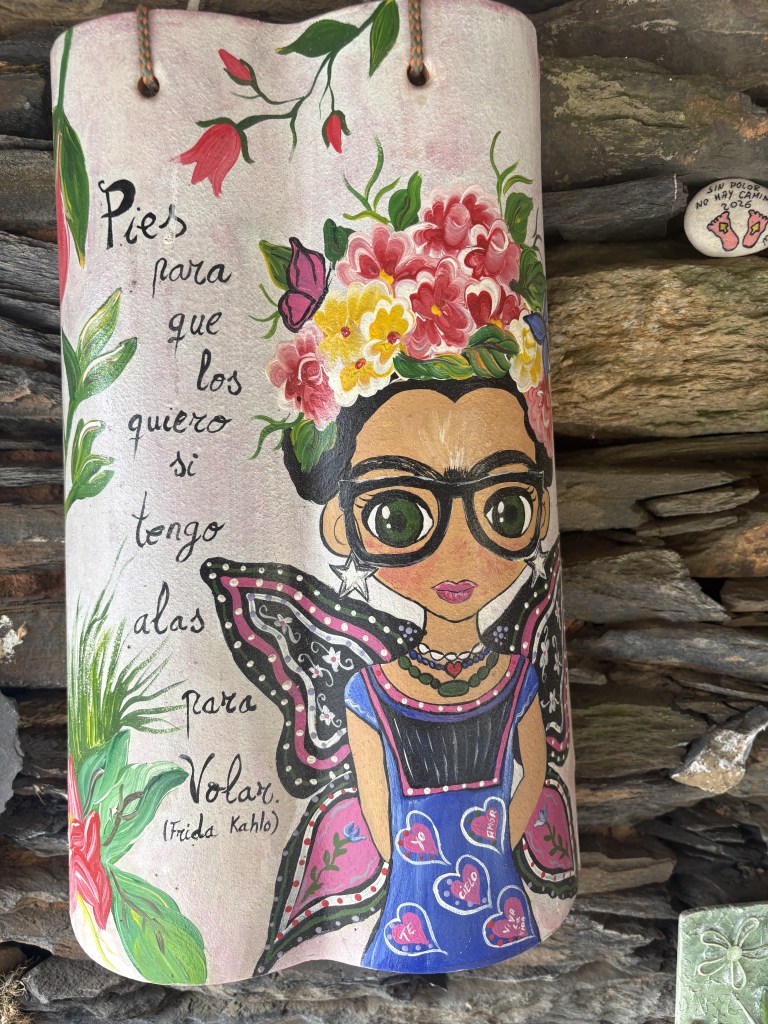
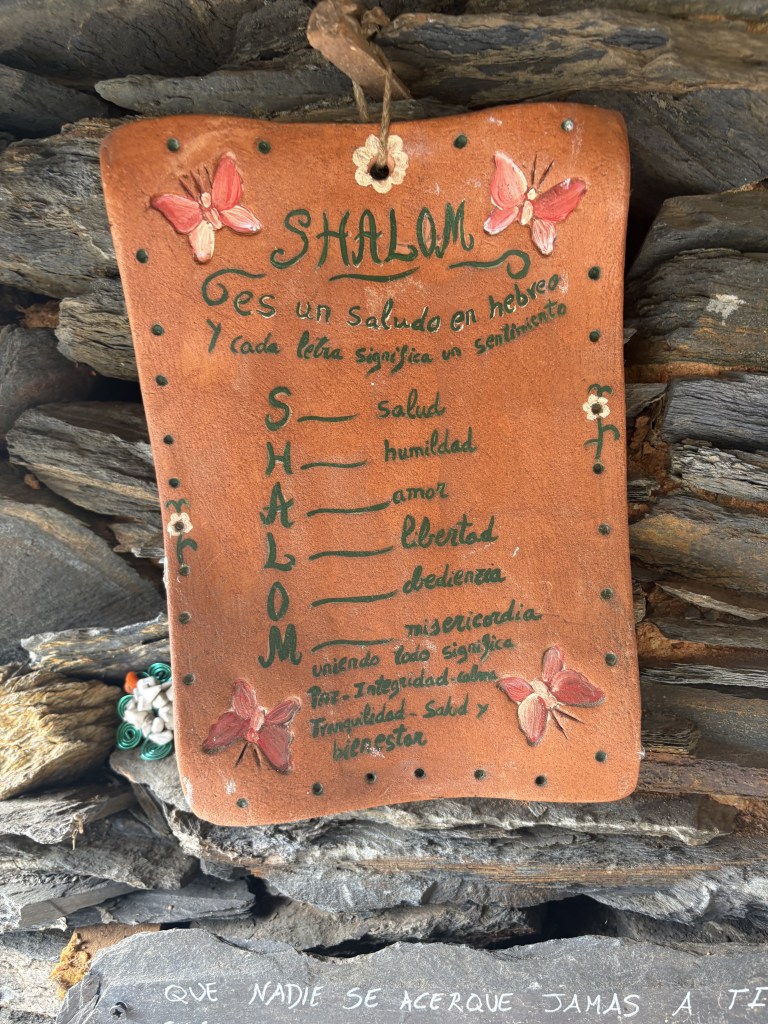
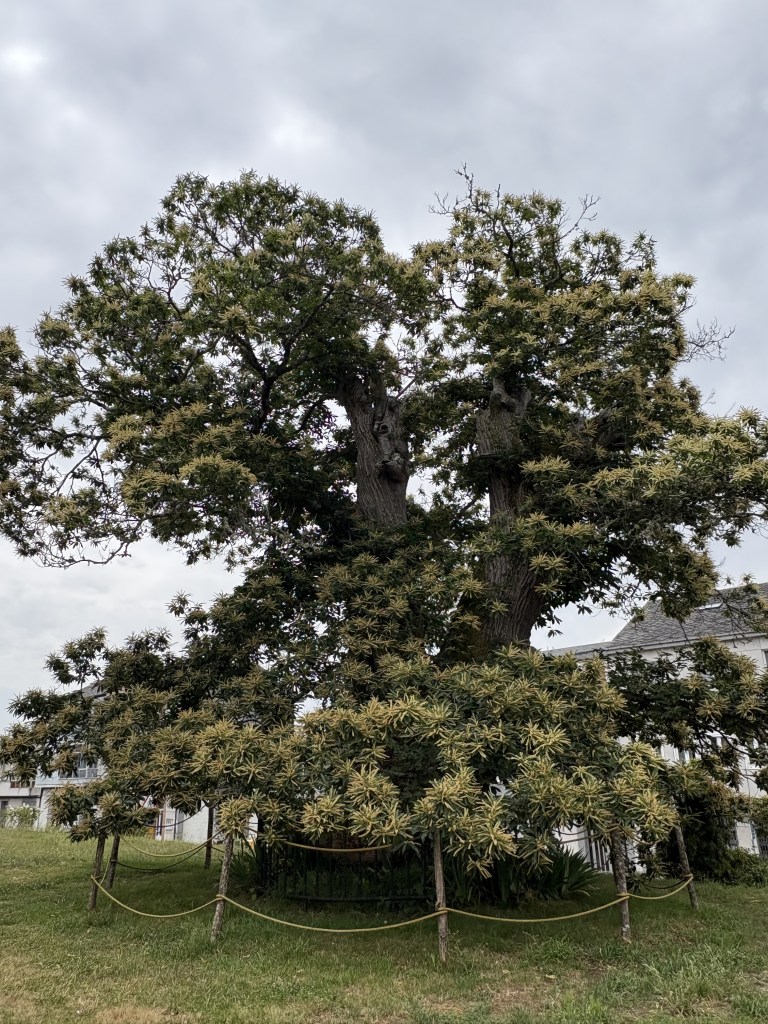
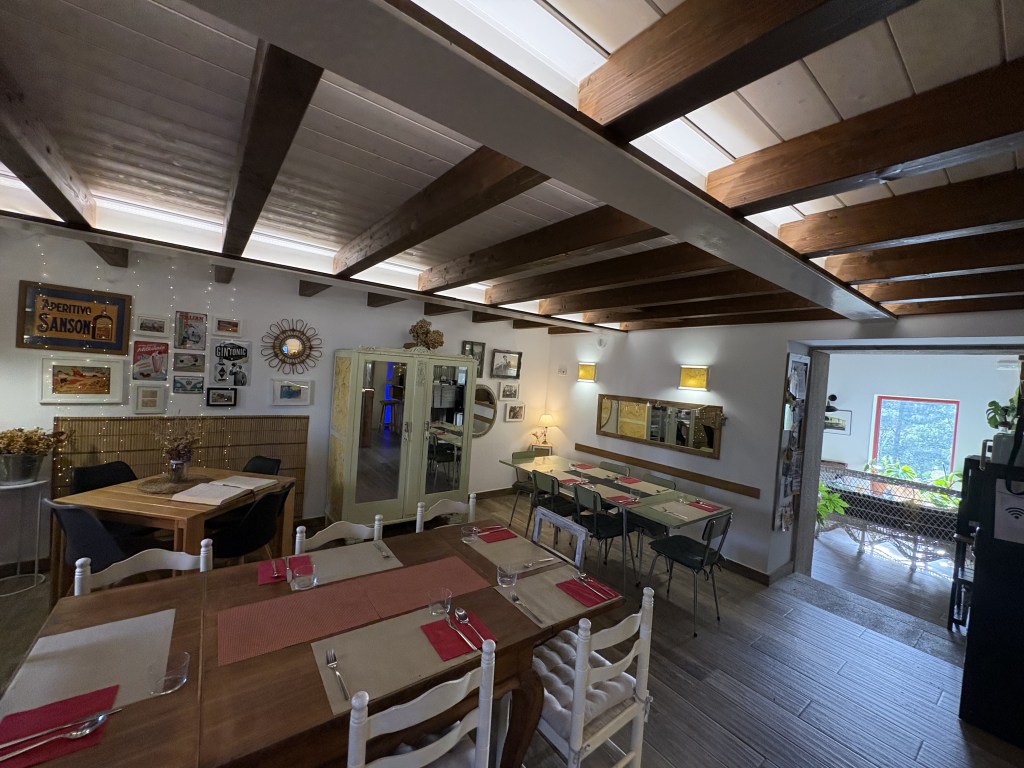
I booked an albergue in Parga but many people stop for the day in Baamonde. The front of my ankle really started to be painful and I wasn’t sure if I’d need a taxi the extra distance to my albergue. I kept leapfrogging Sandra and Enrique again and met up in Baamonde. I enjoyed a proper lunch and got taxi numbers but out of pride maybe, I also wanted to see a 500 year old chestnut tree, walk a bit, and call a taxi midway. Calling a taxi midway didn’t seem feasible, as after a long walk down the highway, you turn in and upward into a forest trail. It was lovely, but I was extremely hot, tired, and achy. The last mile was terrible. The last 500 meters I was audibly weeping. I had never arrived at an accommodation so distraught and grateful. This was a lesson on discernment. What did I have to prove and to whom? If I walked 3-4 more miles, if I skipped a part, what would I miss? In part, it seemed difficult to call taxis, ensuring they had Whatsapp, that I could describe where I was for pick up, the cost. The albergue at Parga was a lovely space, renovated in a very small hamlet with not too much else going on. Being on the hillside it had a lovely natural view. The communal dinner was delicious and great conversation with Tina, my dorm roommate Frank (Belgian), a Scottish couple going to volunteer as hospitaleros, who I exchanged emails with if I ever want to also volunteer or hike the West Highland Way. There were no fans in the rooms and it was so hot. There was a fiesta or BBQ in the hamlet so we listened to music until late and Frank closed our window to drown out the noise, making the dorm even hotter.
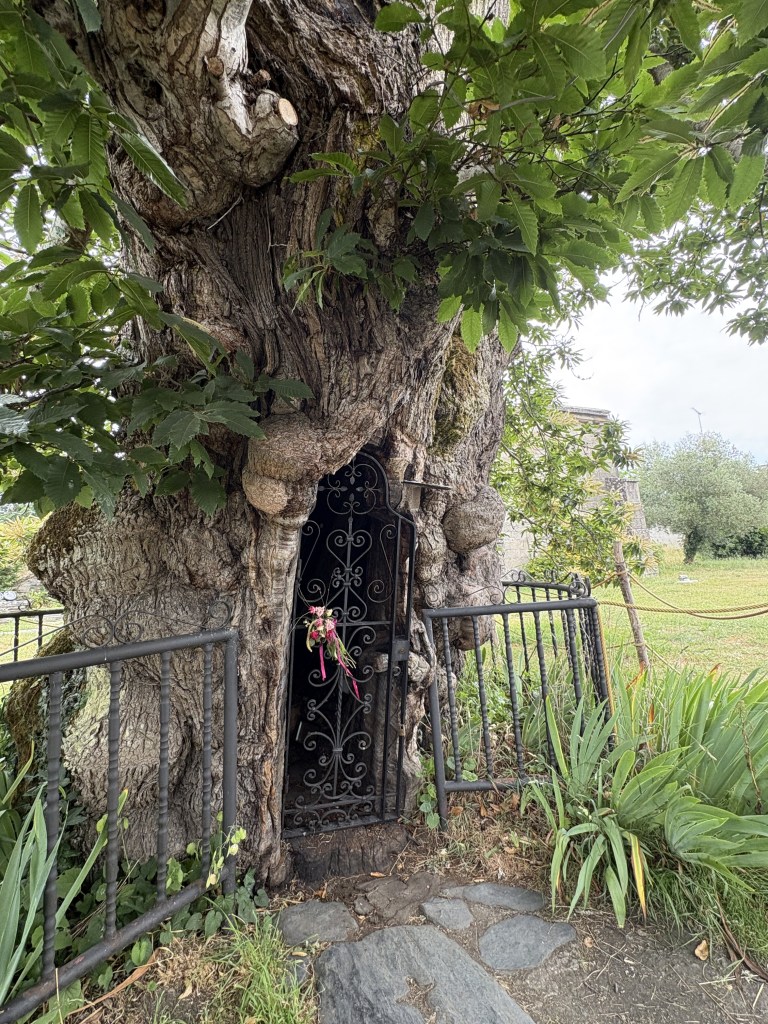
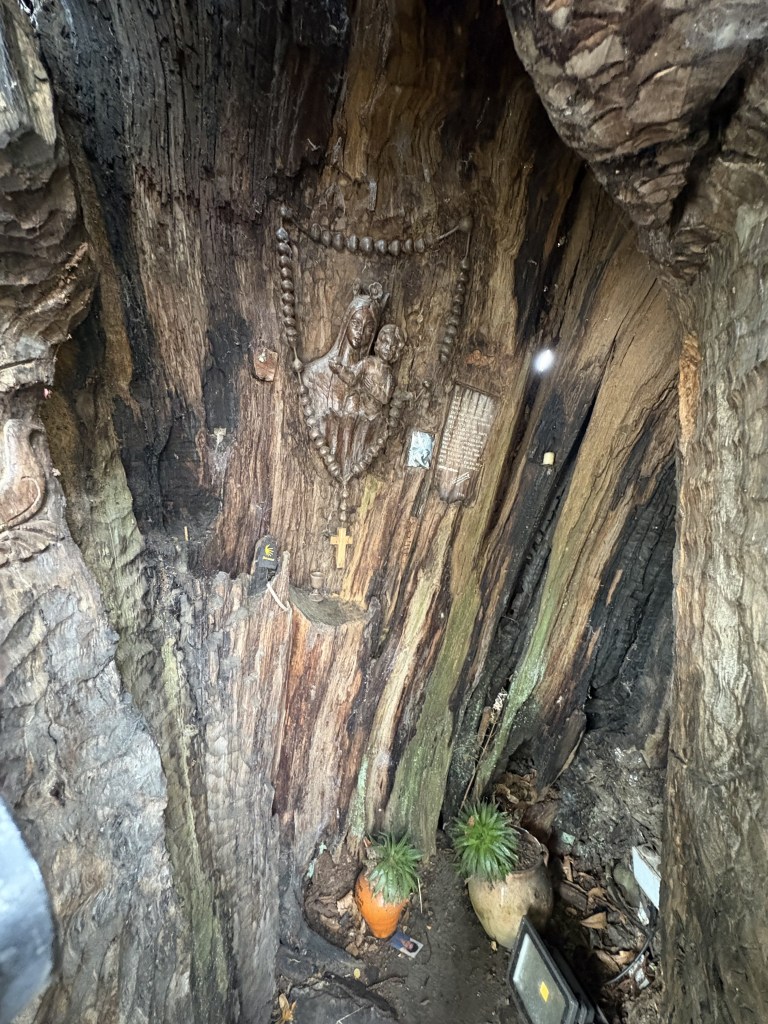
Parga to Sobrado dos Monxes: 16 miles
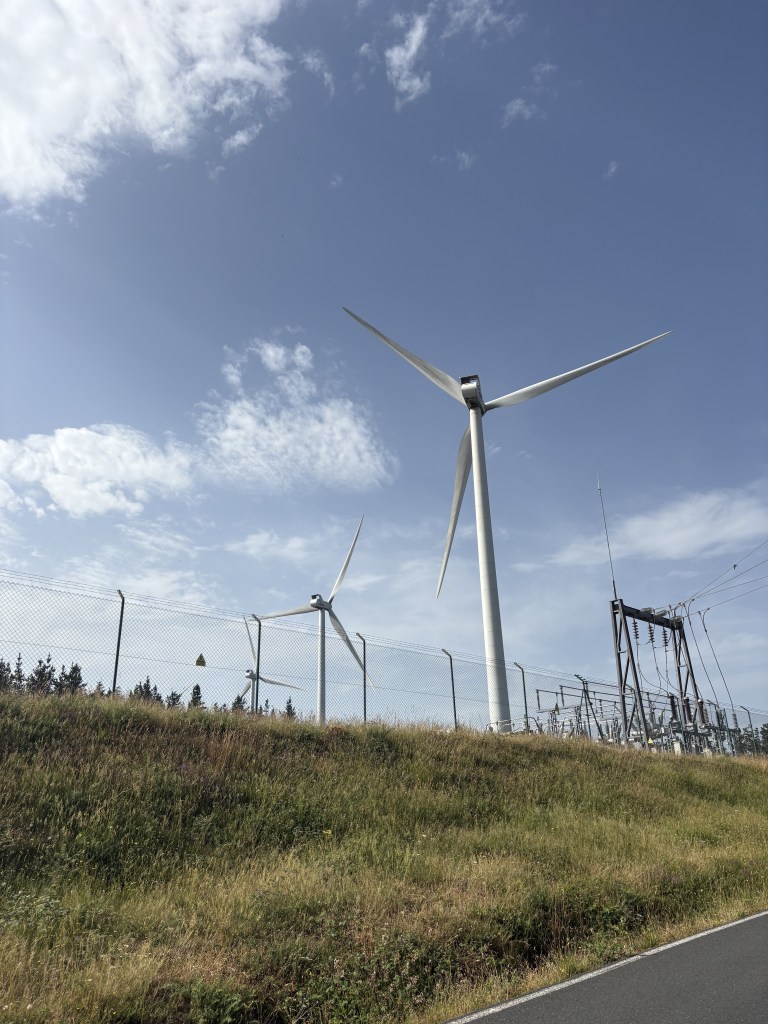
I really felt the mental challenge of walking the camino today. Some readings I’d done agreed that there are parts to the journey. It begins as mostly a physical challenge, then the mental fortitude is tested, and finally a spiritual transformation. I think with the time I had, I passed through the first two challenges: physical and mental. Yesterday I wanted to cry and give up. And other days in Galicia I took all my frustrations out on the hiking poles, or cursed aloud to myself for the last 5 miles. While I walked up to a row of windmills which provided a short breezy respite from the heat, pavement really tested me! No one was around on this long stretch either, except one camino biker who chatted for a min before riding off for the last 10-15 minutes… it’d take me another 2 hours.
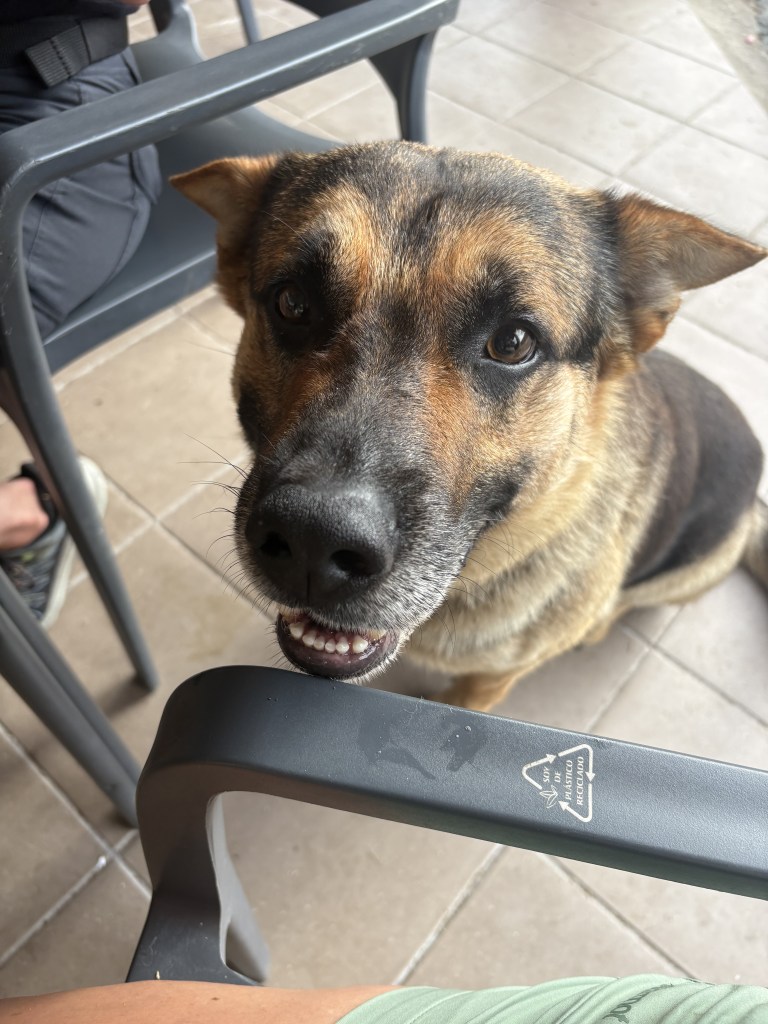
A very friendly German Shepard heightened my motivation, and we shared a ham sandwich. More crosses in Galicia than in the Basque Country, generally more religious and excited or supportive of pilgrims. I walked a short distance with an American couple, I think from Texas. They were walking the whole camino but very slowly so they could walk more relaxed each day. Getting to my hotel in Sobrado was another ‘thank Jesus’ moment. In addition to painful foot and ankles, I was developing “hikers rash” on my ankles. From the heat, socks, and swelling. It wasn’t too much of a burden but lasted a few days. For dinner, I joined a group of men, 2 Spaniards and 1 Italian, who had met on the camino years ago and have since done a few more. This trip they were joined by someone’s teenage son – the second teen I met. Victor, the dad, said he appreciated I didn’t try to speak much English with them and the other man Lucas said he’ll only speak Spanish to me – I need the practice. It was nice to converse at length in Spanish. I never ended up running into them in Santiago. It happens this way. You become very friendly and may join up together for drinks or a meal, but you may not see them again, and that’s OK.
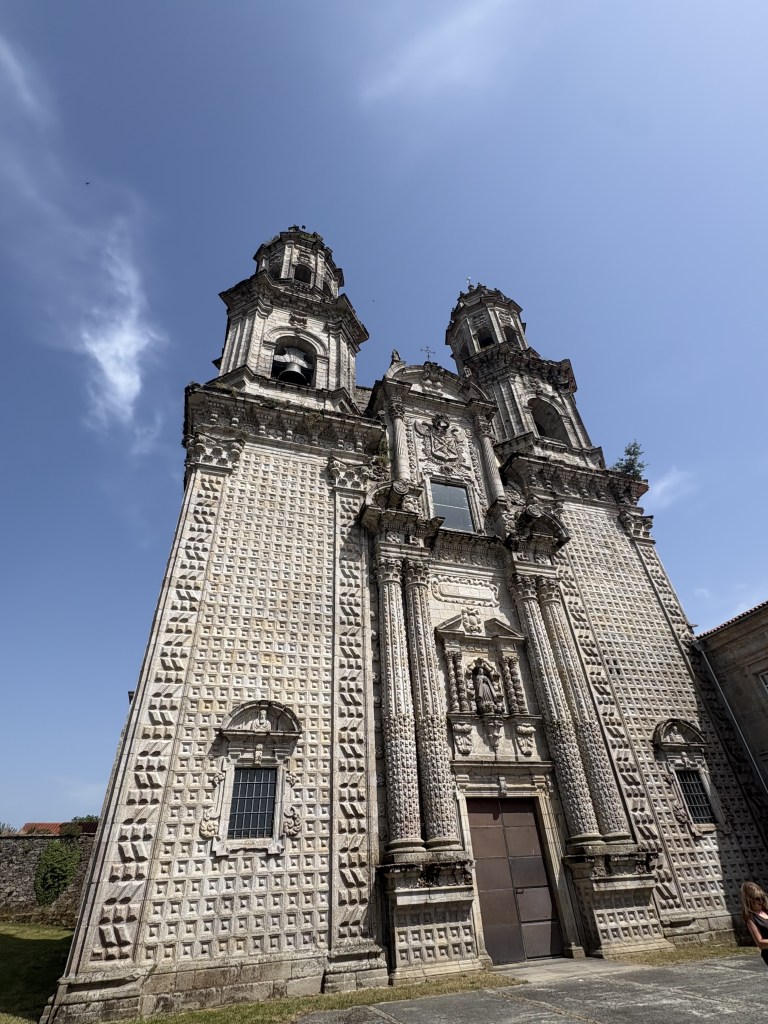
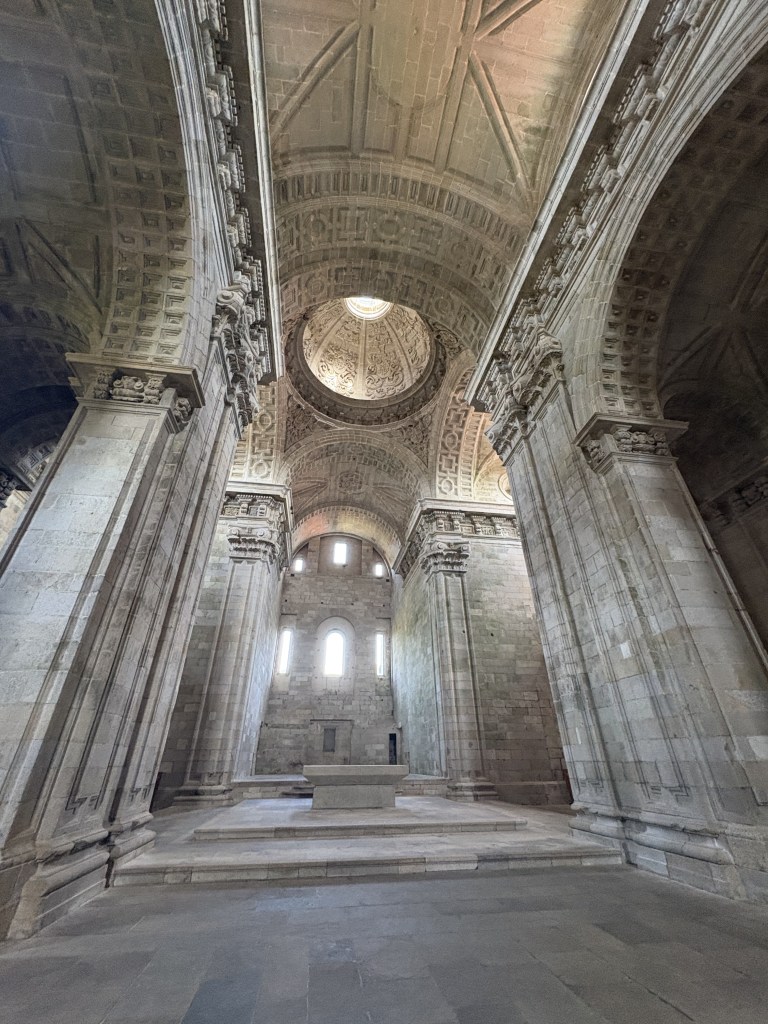
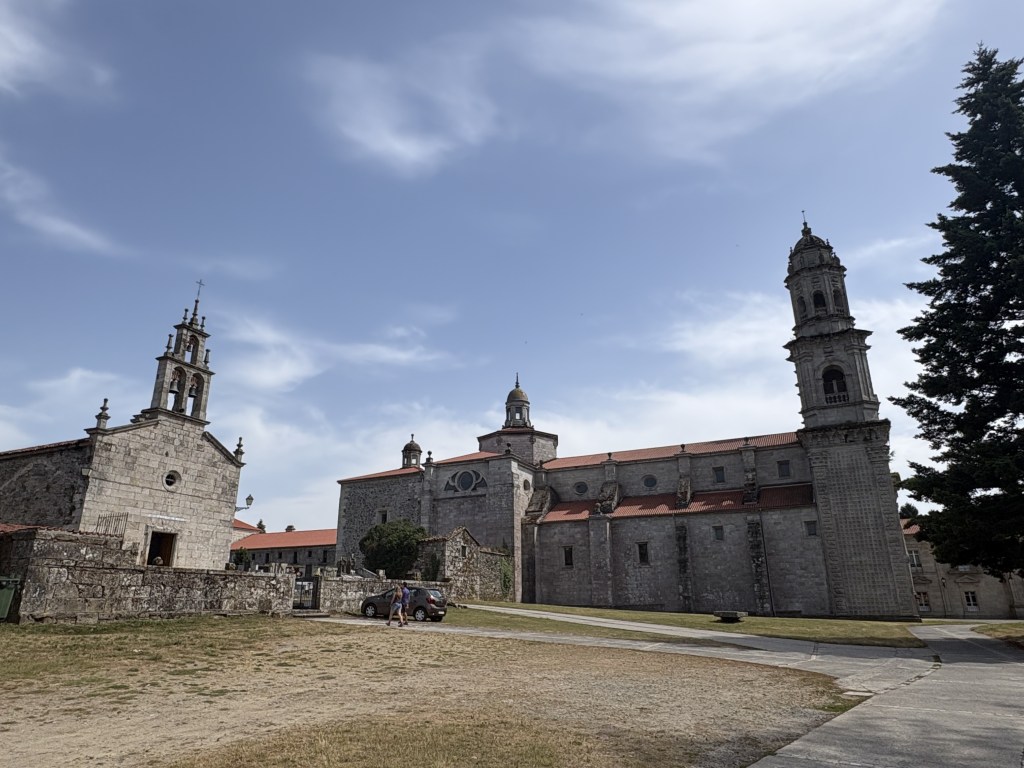
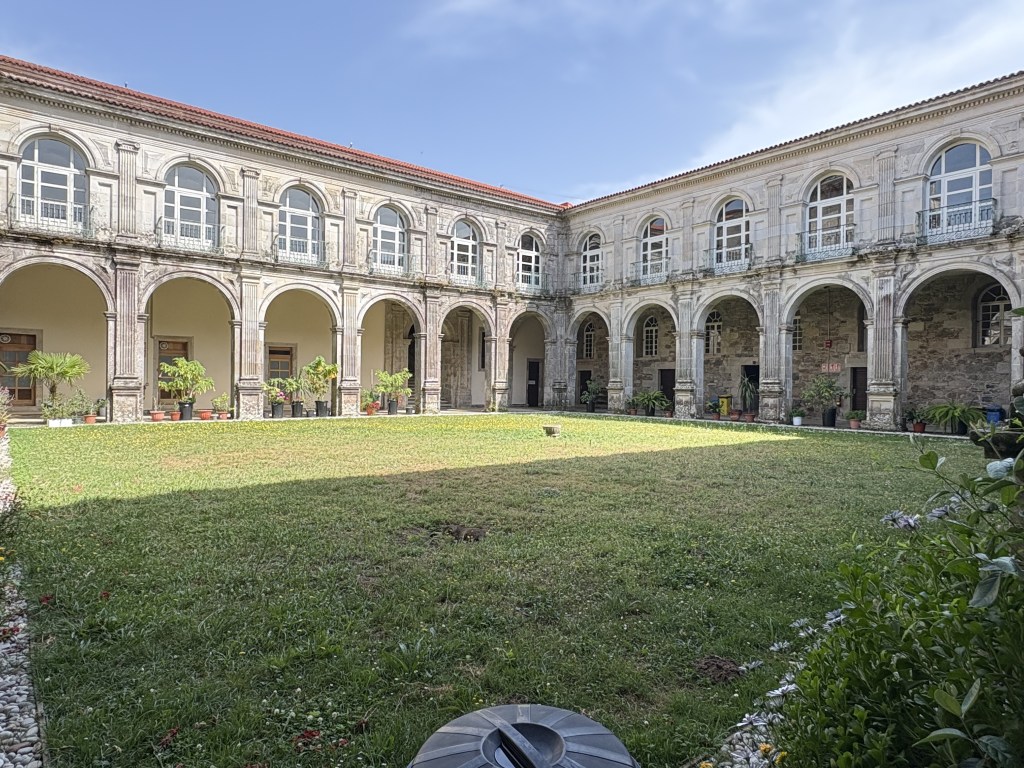
Sobrado to Arzúa: 13.7 miles
Woke up to thunderstorms so we all stayed in bed a bit later. My friend from Canada wanted to walk together so she could pace slower. Her oura ring said to take it easier today. It sprinkled a lot again later on and we’d take our rain gear off and on throughout the day. Walking with company made the day feel faster, of course, but also the cooler, cloudy temps made the walk much easier. We still had mostly pavement though! My feet!
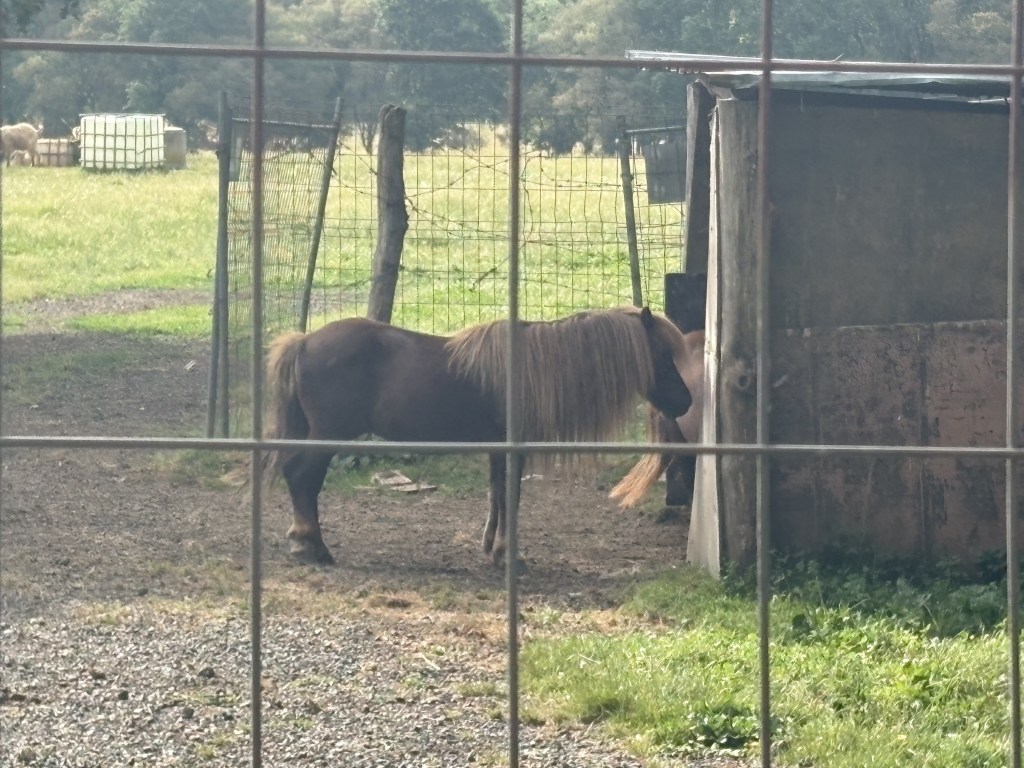
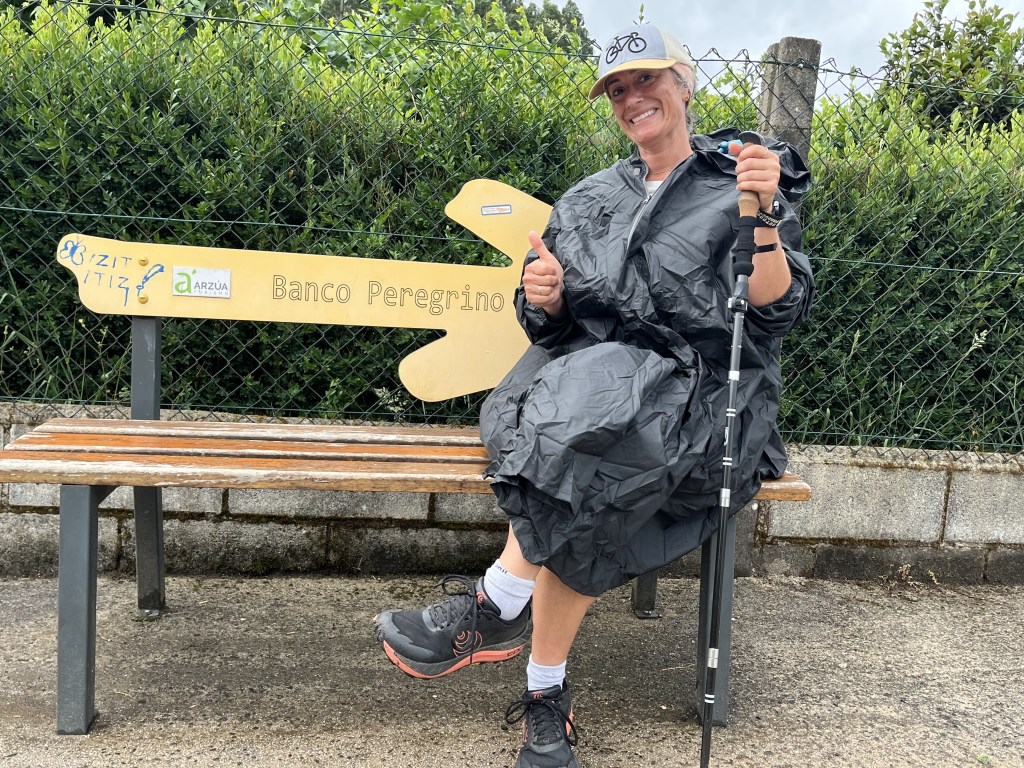
When we approached Arzúa there was an immense increase of pilgrims. In this city, three large routes converge: the Norte (ours), the Primitivo, and the Frances. The Norte is least crowded and the Frances is the busiest. Having all of these extra bodies around felt really odd, and somewhat bothersome. The cafes, sidewalks, and stores were jammed. Heading out the next morning felt like starting a road race run, having to pass groups every minute. There were also loud conversations, lots of younger kids, and garbage piled up near overflowing trash cans. There were many more cafes, but the rest of the experience was overwhelming and took away from the enjoyment of the landscape. There’s a stronger camaraderie seeing people on an isolated trail over many days, and then seeing new people and in large volume.
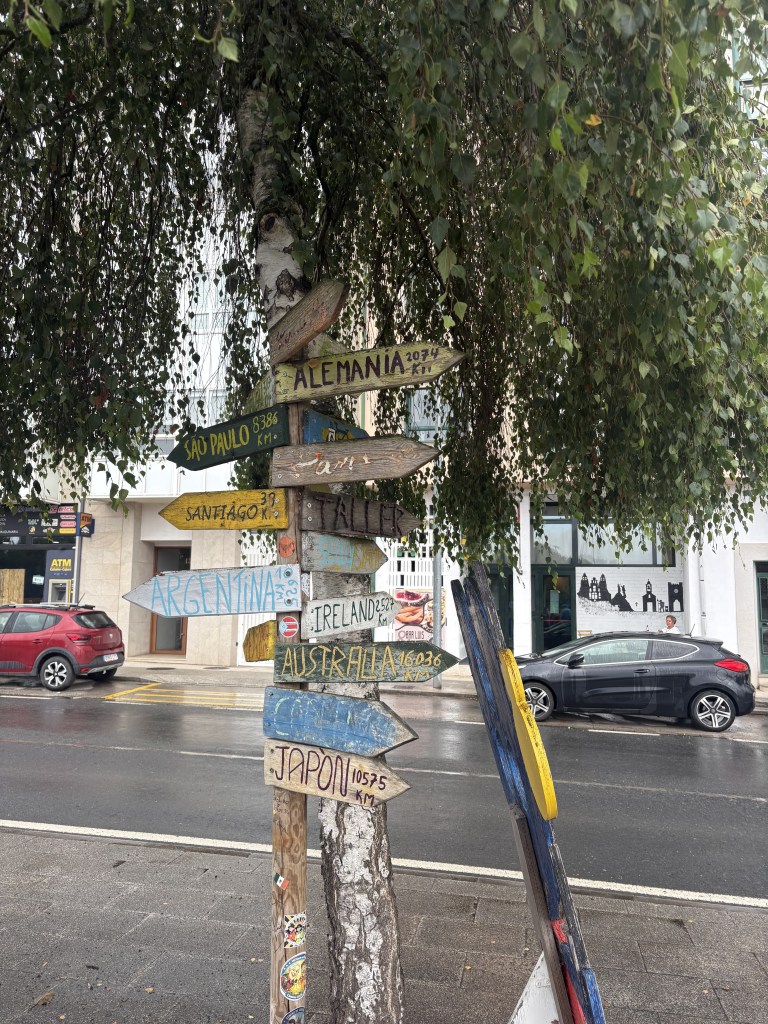
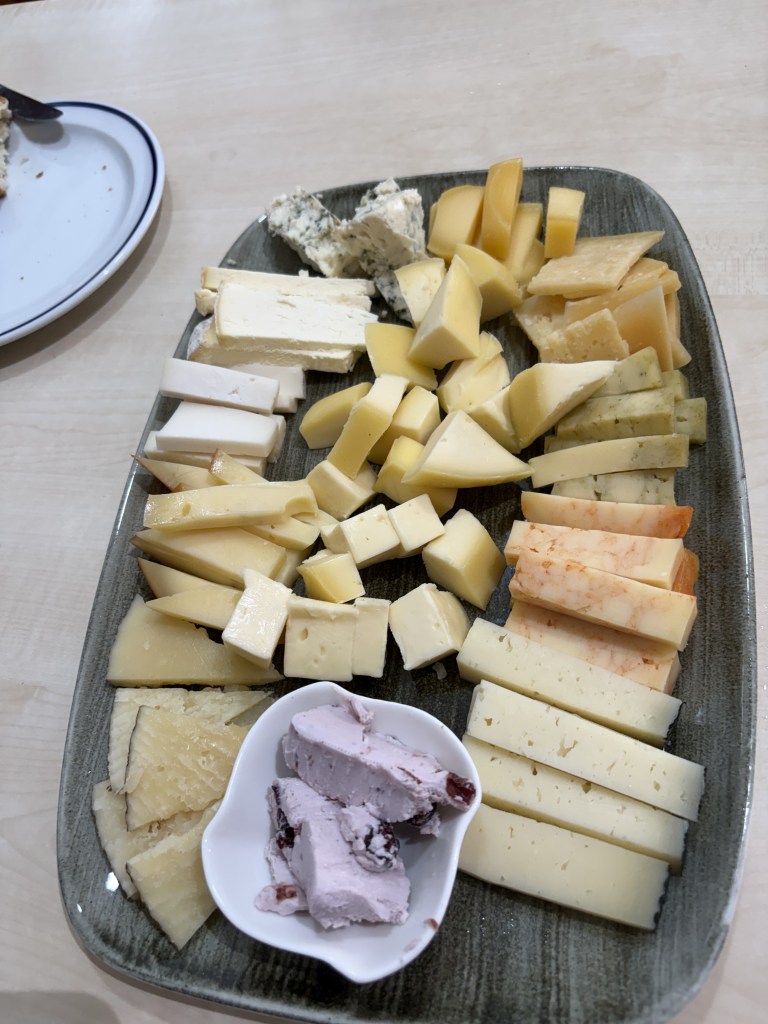
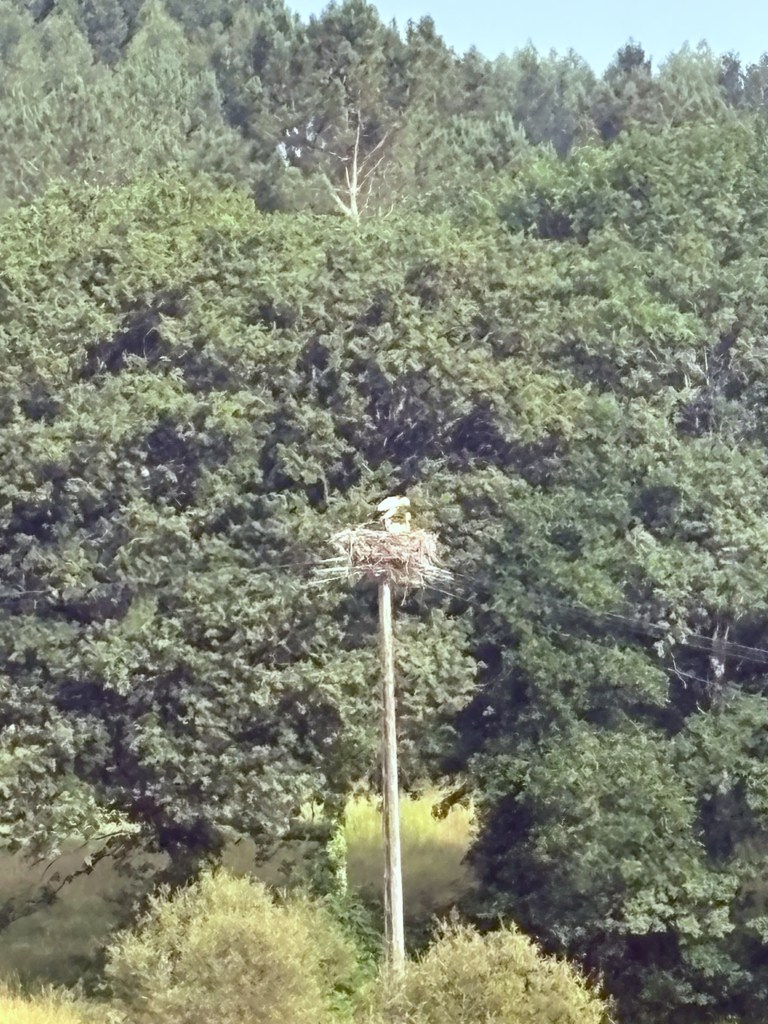
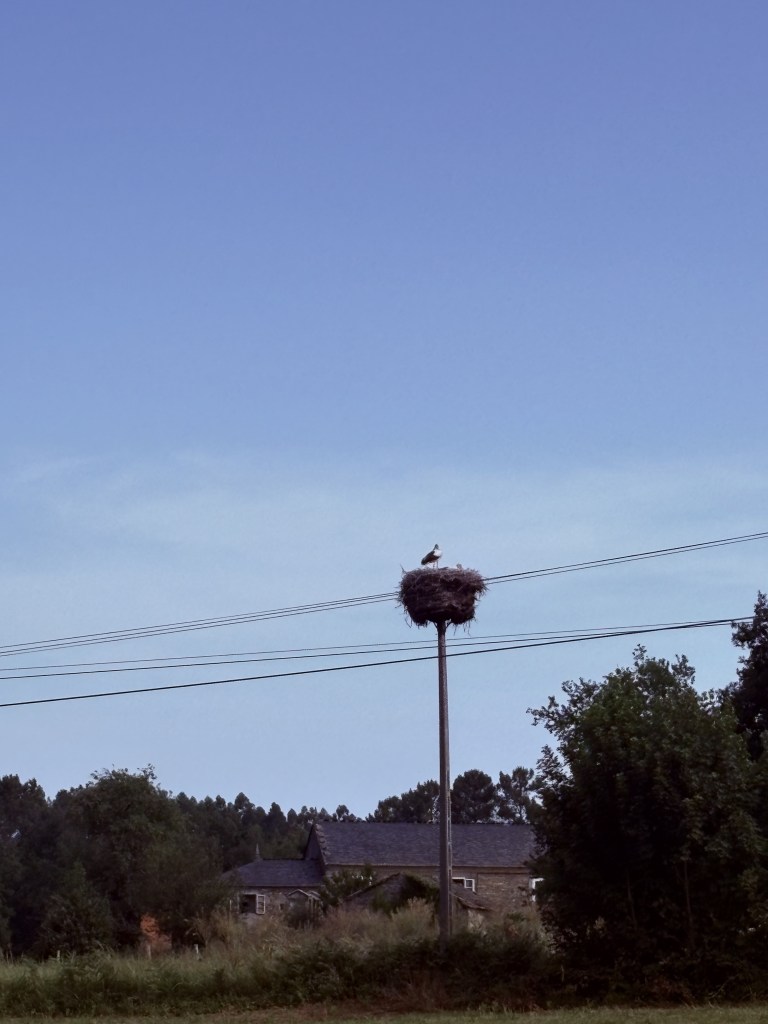
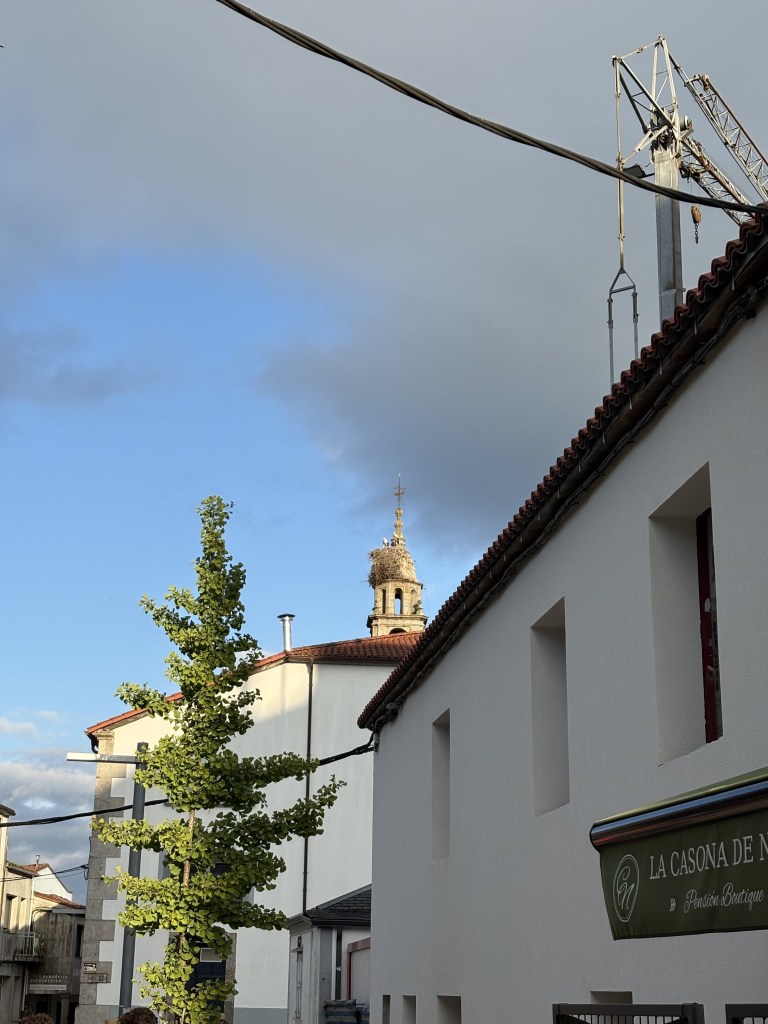
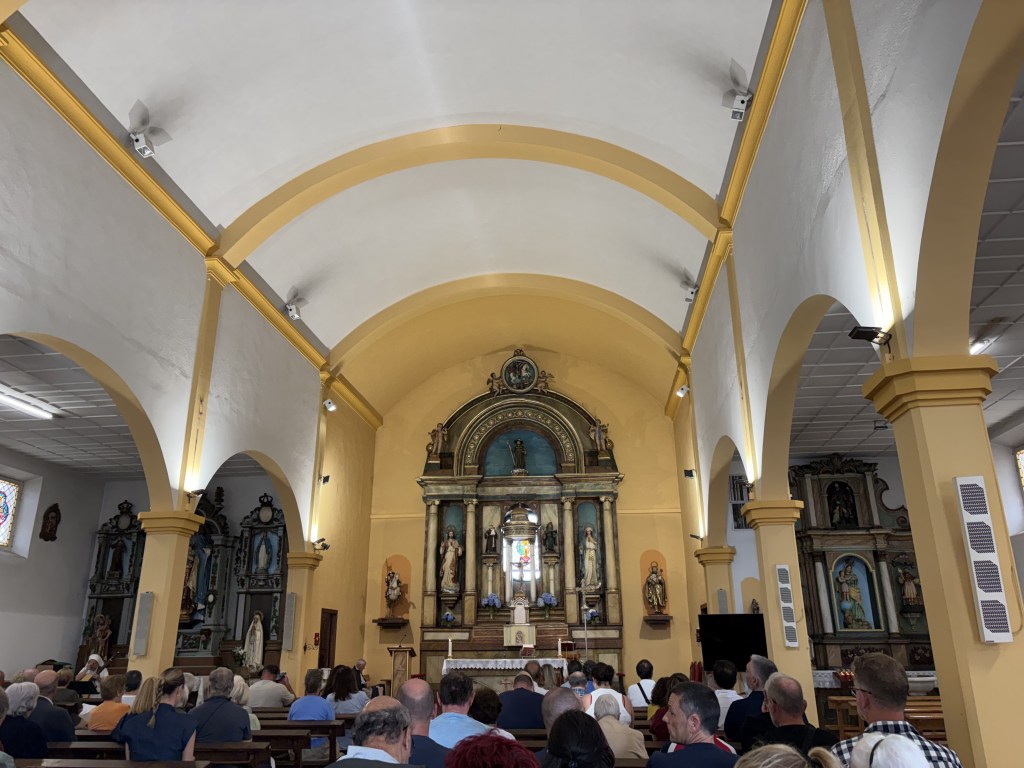
We did have an amazing cheese board, as we saw many signs boasting of being the land of cheese in Spain. Many were Manchego varieties, but not exclusively. I went with friends to pilgrim mass, my first. This was really the first time we saw an active church or a mass being offered. While I was not on the camino for religious purposes, it was a worthwhile experience to find the Catholic and pilgrim connections to broader human needs, like communalism, singing or manifesting in unison, and eating from the same plate (the eucharist). On the spire of the church sat a stork’s nest. You can see these throughout Galicia. Historically, they often nested on churches since they seek the highest point in an area, with more artificial platforms being built for them in recent decades.
Arzúa to Pedrouzo: 13 miles
I knew this would be the last challenging day. Tomorrow, going from Pedrouzo to Santiago should feel easy due to the excitement. In Pedrouzo, I stayed at a hotel with spa amenities, which was quite great and a very reasonable price! I made sure to take advantage of it! I had walked again with my new friends. The last nights we regularly had dinner together and felt like old friends at this point. People will often talk about a “camino family.” I had found mine.
What motivates you during challenging times or an arduous hike?
Peace and Happy Hiking,
Maria


Leave a comment