Leaving behind the Basque region in a rideshare, I gazed at what landscapes of Cantabria and Asturias I could see from the highway. While I know it was not a fraction of the beauty I could encounter if walking, it was still impressive and made me wish I was seeing it all by foot.
Like the Basque region, Asturias also went through a heavy industrializing period as it has been a rich center for mining on the Iberian peninsula for thousands of years. The Romans knew this and later coal and steel would dominate. In addition to opportunities for work, the region saw powerful upticks in labor organizing and uprisings in the early 20th century. After socialist and republican leaders took over the government in 1931, the II Republican became dominated by a more regressive center-right coalition by mid-decade. Instability and repression followed, with workers organizing en masse. Strikes and labor parties turned to revolution. A two-week miners’ revolt in 1934 concluded with violent repression by the Guardia Civil. This drama was a glimpse of what was to unfold on a larger scale in the coming months and years.
As I pondered this history, some of the women I studied for my Masters and PhD were involved in calls for land reform, anarcho-feminism, women’s suffrage, and worker’s rights, as I chatted with my fellow passengers. Sergio drove us to various stops on his route to Galicia, the two women in the back were local. I didn’t attempt to speak English with them, though I’m sure their English was considered advanced to my Spanish, and they explained their appreciation and surprise at my ability to converse (even if not eloquently). One woman sitting in the back of the rideshare (she was a professor of French), testified that Americans don’t even try to speak Spanish, and this bothered her how we expect everyone else to convenience us with our native tongue. I identified in her explanation that English-speakers consider themselves the “raza superior.” Our generous driver, Sergio, explained that he drives the 4 hours from Bilbao to his girlfriend living in the region of Galicia every weekend. When the French professor asked why he didn’t move there, he answered that finding work is his biggest barrier. This is something I was aware of: Galicians have emigrated to other parts of Spain and the larger cities for quite some time. Even longer, Galicians emigrated to the “New World” in overwhelming numbers. More on this soon! Galicia is still very rural and lacks industrial cities for work opportunities.
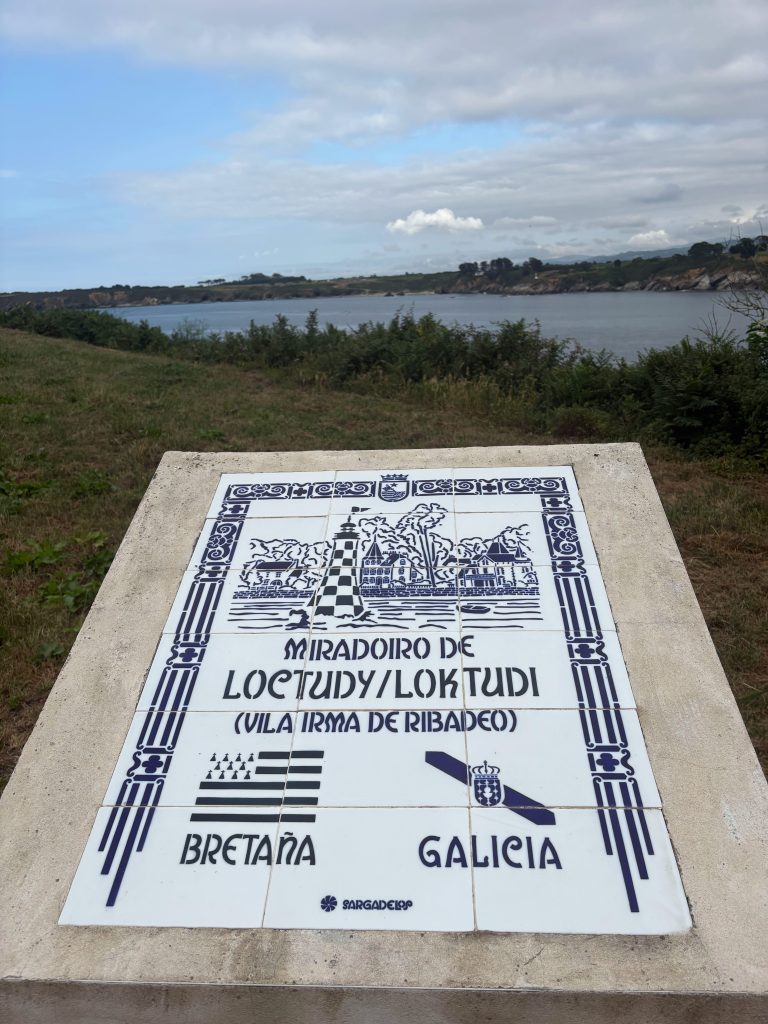
The plaque is a nod to the Celtic ties and culture that northern Spain shared with places like Scotland, Ireland, and parts of France. In fact, on my first real day of walking in Galicia, I heard bagpipes echoing down from a small hillside church where festivities were taking place. Other cultural similarities include plaid, hillforts, and pagan symbols like the Triskel or trinity knot.
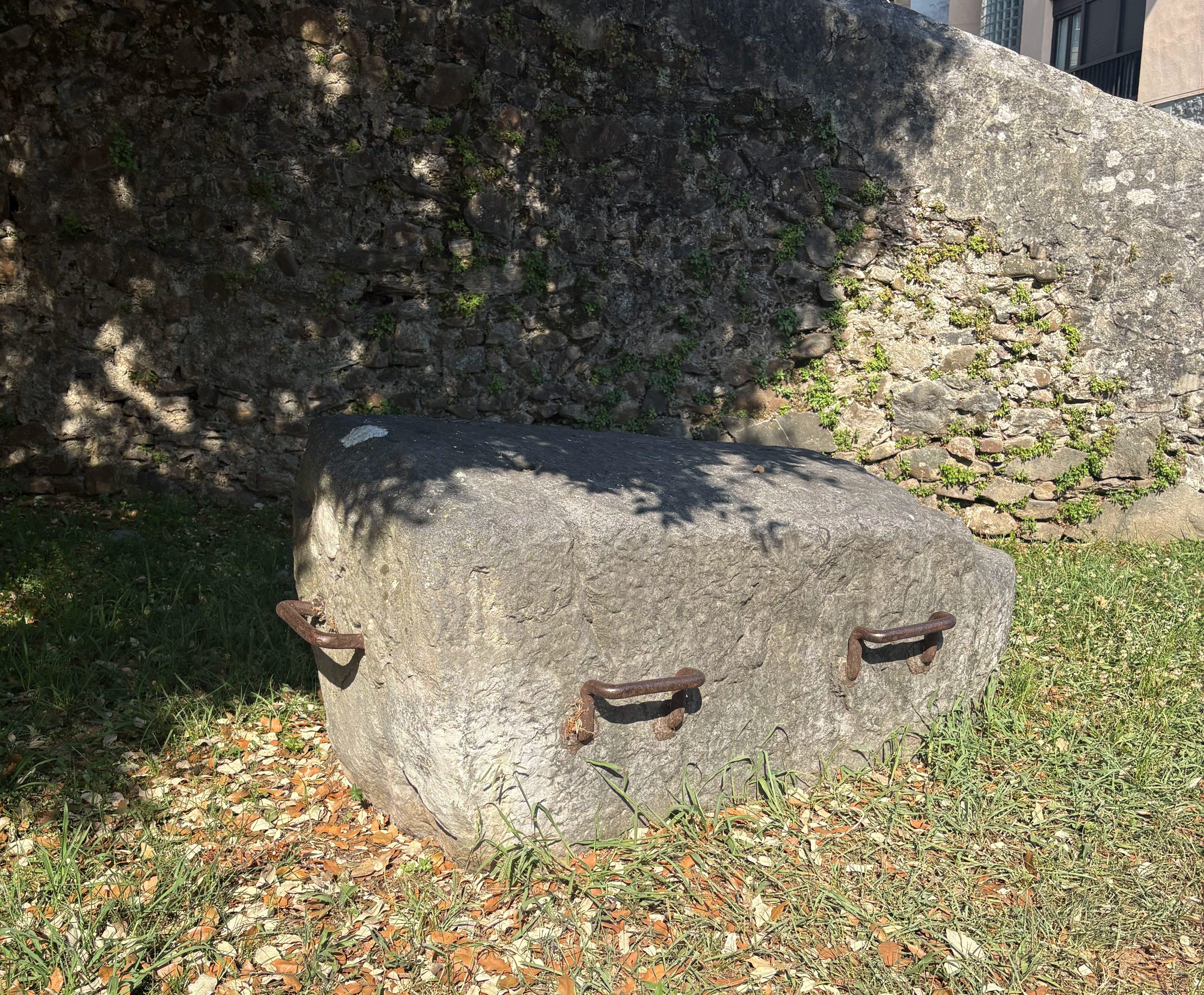
Old, heavy stones dot the landscape and yards. Strength competitions are a feature of Basque and Galician cultures (notice the handles). I may or may not have desperately and hopefully grasped a couple of large stones along the way… just in case they worked like Claire’s Scottish love portal through time.
In Ribadeo, I spent my last night at the seaside. I unfortunately got to town too late to figure out how to efficiently get to Praia das Catedrais (Cathedral Beach) and back. I regret this, as many other excursions I could have and should have done. However, despite my staying at a relatively modest hotel, I felt spoiled having a private room, soft silky sheets, multiple pillows, and a cold air unit! After an uncomfortable stay at the hostel in Bilbao, a hotel felt like paradise. Being a “pilgrim” allows you to appreciate the smallest of luxuries much more. A similar feeling of gratitude followed access to a laundry machine and having dry clothes!
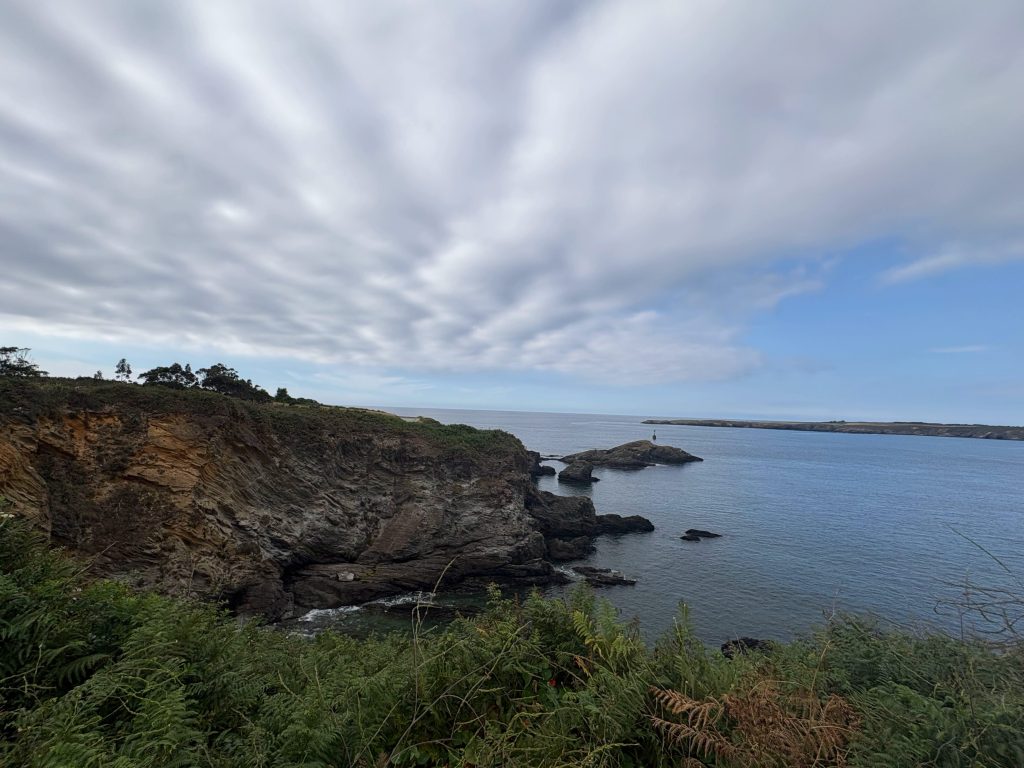
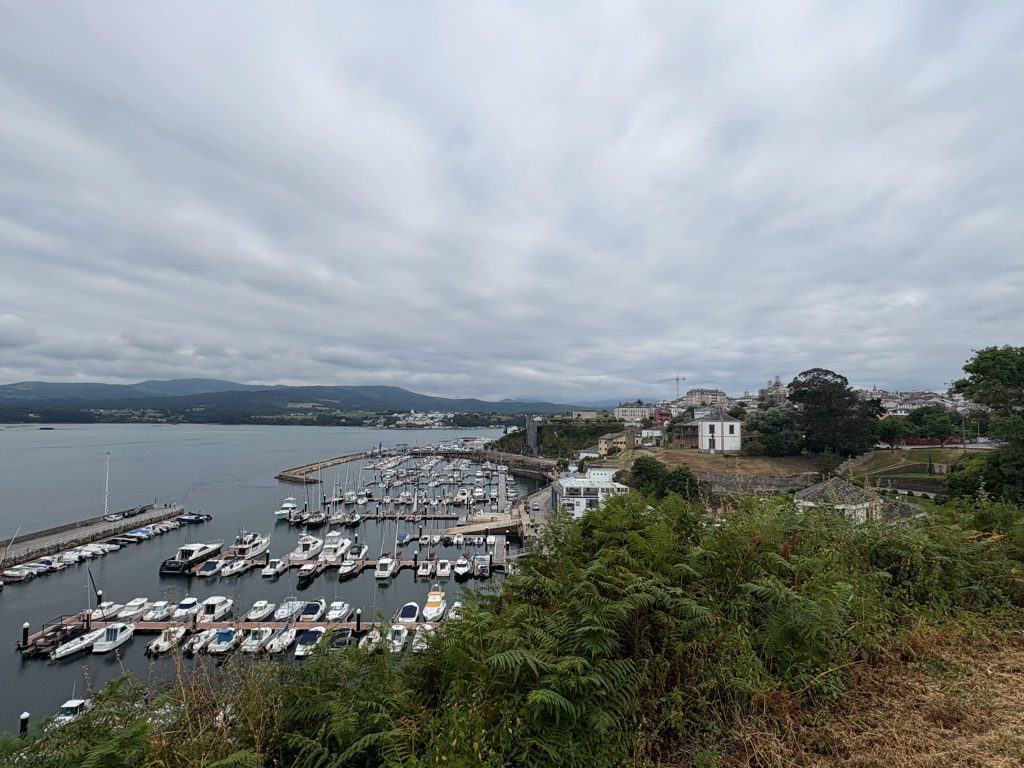
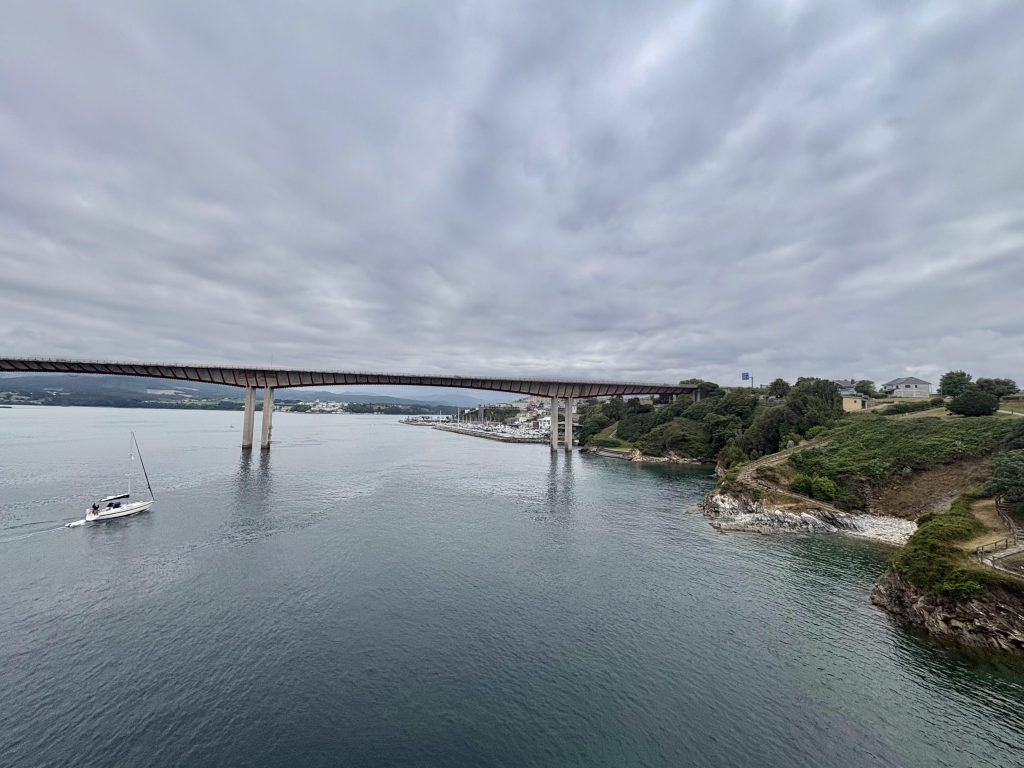
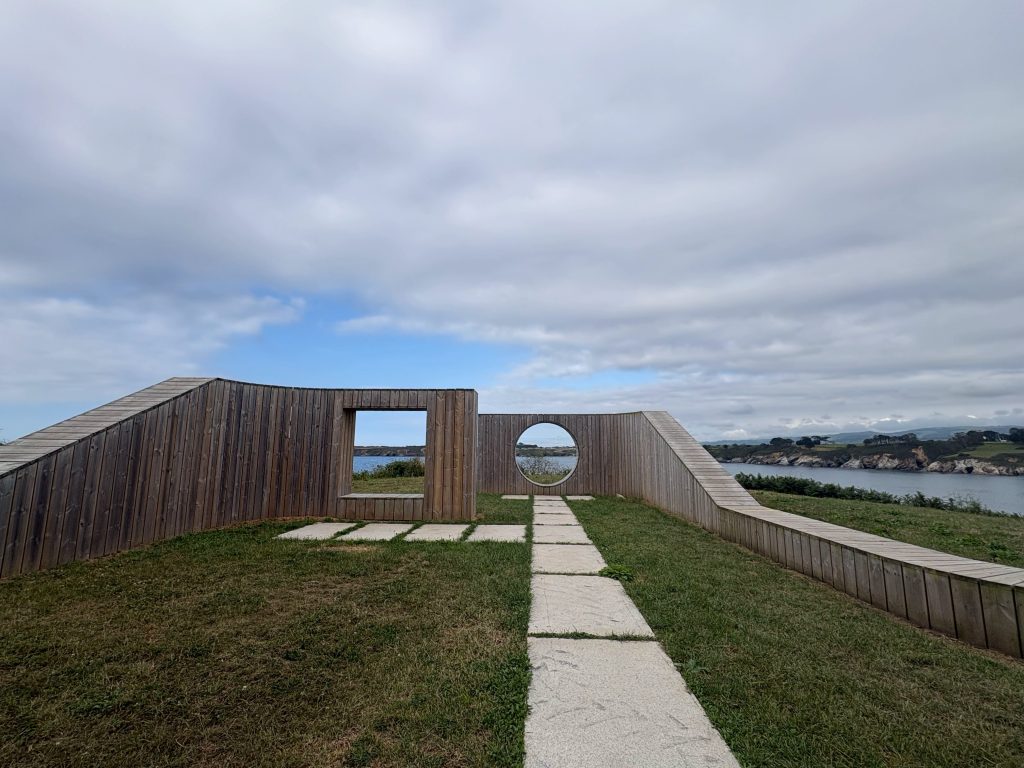
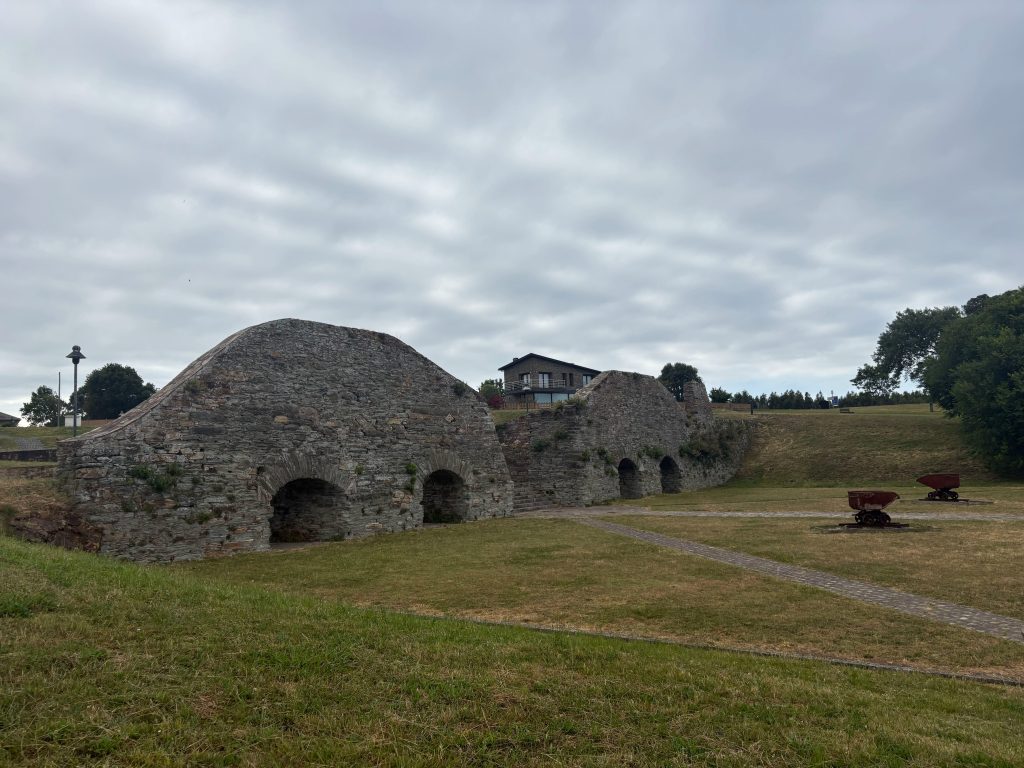
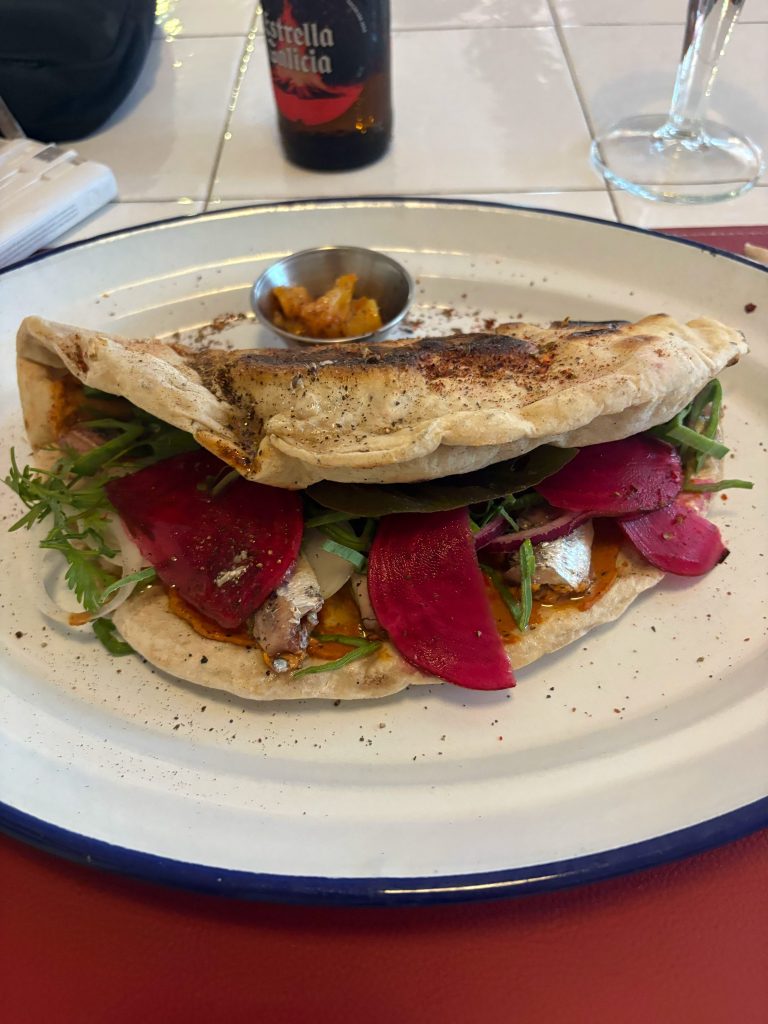
I walked around and enjoyed the dramatic cliffs that Ribadeo does have. A walking path goes up to the preserved ruins of the old fort and hosts some new art installations. Down below my amazing view of the sailboats in the marina, boys were playing and daring each other to jump into the water with a countdown of 10. While I so wanted the fresh seafood of a fisherman’s paradise, I opted for an Indian-Galician fusion: Kalpa Amodiño Taberna Gastronómica. The owner runs the place and seems to be great friends with many locals. As I ate my deliciously fresh roti with Galician flare (including sardines), he embraced and spoke intimately and kindly with various people and family that came through. It was lovely. He explained the restaurant combines his hometown in India and the local products and influences of his adopted Galicia.
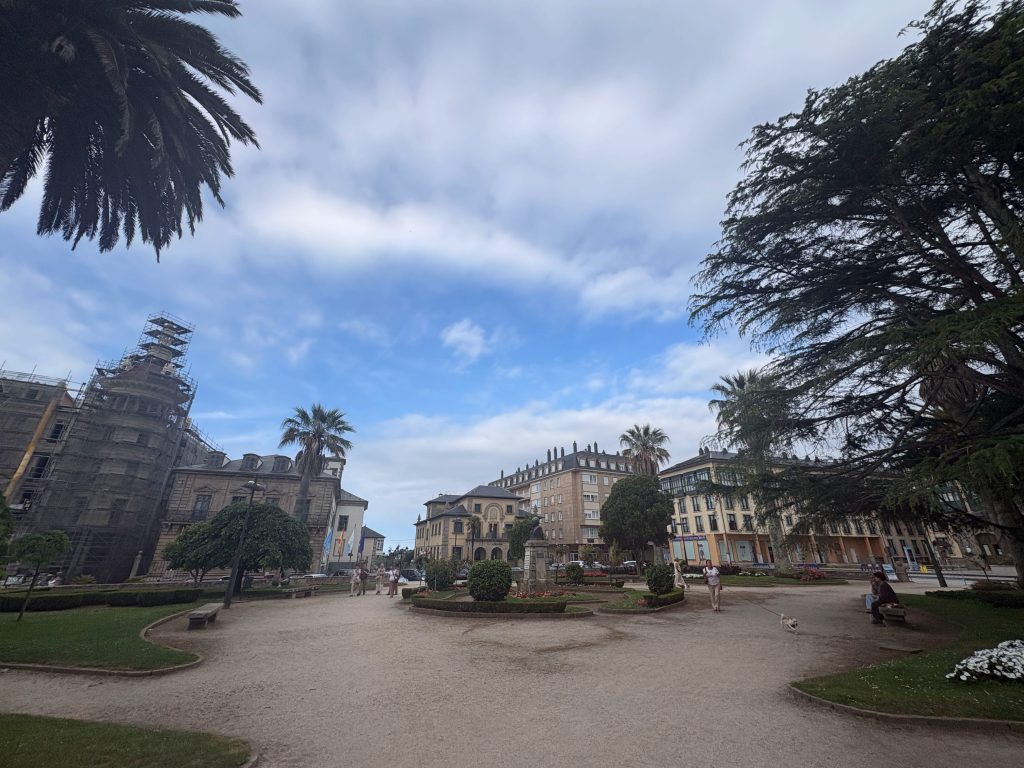
I clocked a mere 5 miles today walking around sleepy Ribadeo, but there were some very steep paths. Interrupting the camino into different sections has its challenges, and after two days of touring cities, I felt restless, missing walking the camino. I had a long day ahead of me after two days of being out of the flow. I felt still from this lack of steady hiking. I also knew this was the last sight of the coast unless I took a day trip after reaching Santiago. I breathed in the salty, fishy aroma of the marina, taking in that dream-like wonder that the ocean offers. Already longing, I sighed and went to bed.
I simply love how food records our journeys and cultural exchanges. What fusion food surprised you but you enjoyed?
Peace and happy hiking,
Maria

