Day 4, Mutriku to Erbera: ~10 miles, 1,745 ft gain
The early part of the camino accentuated part of why I was on such a path. The logistics and unknowns with this kind of travel, but the sharp contrast with the purpose and simplicity of a pilgrimage, forced me to examine my anxiety over a few hours of walking. Both with luggage transfer and securing the best route to skip the middle sections of the Norte, consumed me for a few days. I kept Googling routes and transportation options to Ribadeo, which I figured out the website of BlaBlaCars as I’ve written. In retrospect, feeling tense and obsessive over figuring it out and getting it right seems like such a waste of energy. Everything through the trip seemed to fall into the place it needed to be in. A metaphor for life, I went in with too much desire for control due to anxiety and lack of confidence, or faith in the universe. I am excited to try this again another year and learn from my lessons. Let go even more, trust and accept even more. You will be fine, you’ll have what you need. Keep a watch for the unexpected and lean into it.
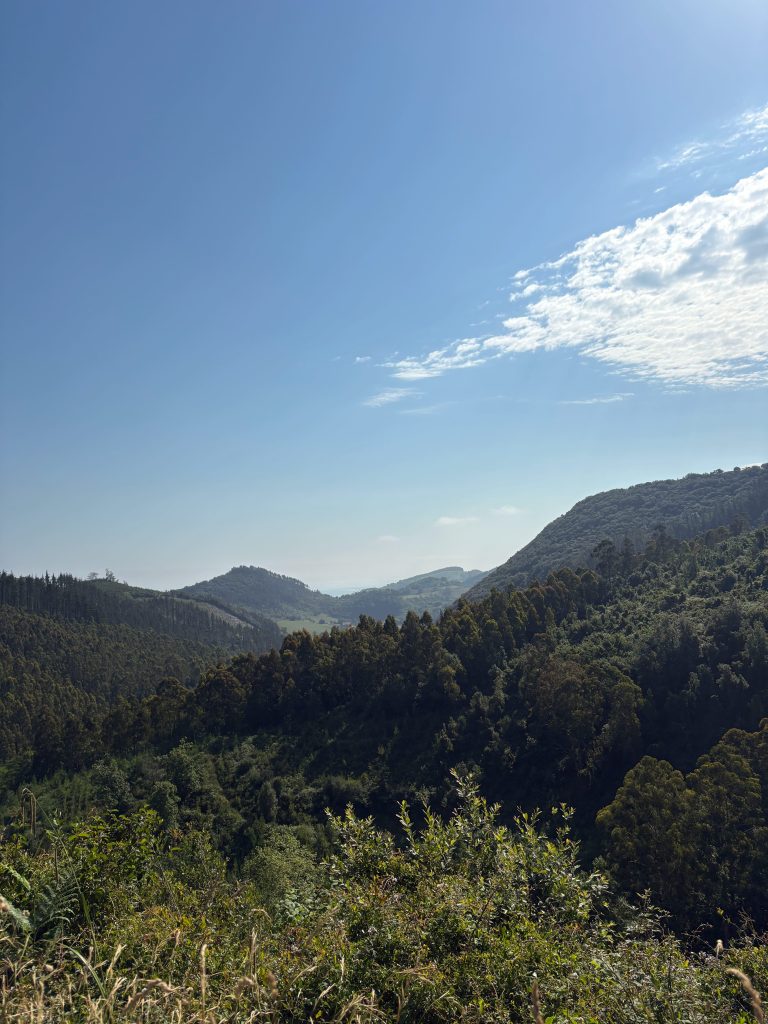
First climb out of Mutriku
Those logistics were taken care of by this stage, and I felt relief and the ability to enjoy the nature on the walk more fully. As much as my body would allow. For some reason I had it in my mind that this was an easier day. It wasn’t. It was shorter, but did not feel much easier. Leaving Mutriku the ascent just went up and up. It felt hotter earlier today. It felt humid, and while nothing was around except tall rugged hills or small mountains, it was rare to be under tree coverage. I felt a bit defeated before beginning. I walked alone today. I passed Veronika a couple of times, and at one point when we were in sync she stopped to take in the views. I think this is a way pilgrims who want to be solo create their distance.
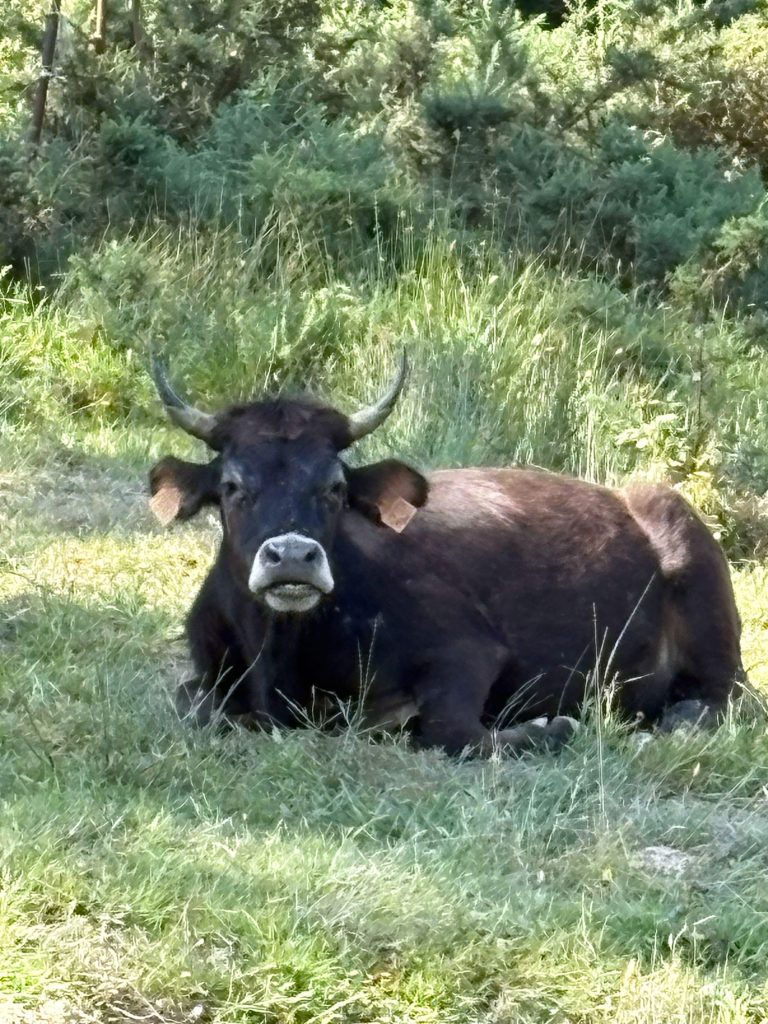
Farm animals will always make me happy
There was only one town, Olatz, that we would pass that day. The albergue the night before gave us breakfast bags and there was a coffee machine, but it wasn’t great. I needed more. Olatz was relatively soon in the hike but I was to the point in the camino that I felt the urge to hoard, stock up, eat whatever I could. In reality, I would have been fine on less. I turned back many times today to gaze out on the green and rocky hills and mountains, watching the sea get smaller and smaller on the horizon until it was gone. Markina-Xemein is typically where pilgrims stop next and the next day, Gernika. Both are inland before heading back out towards the coast with Bilbao and the port of Portugalete.
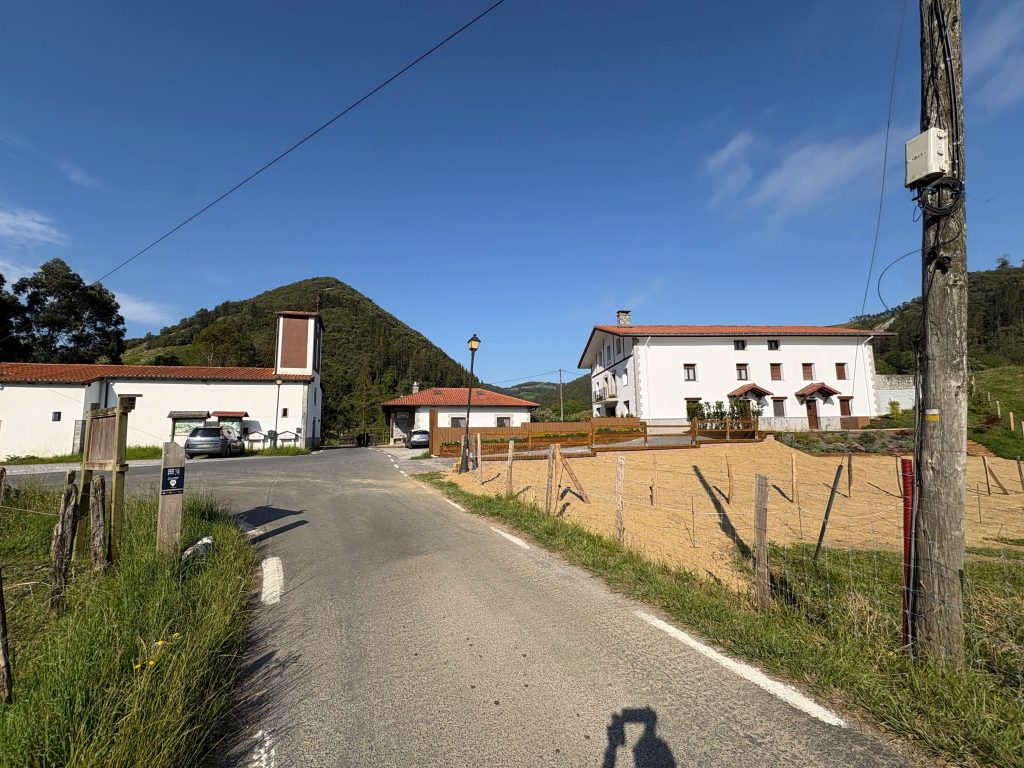
Olatz, it was a good thing I wasn’t an early riser… the only cafe for the day had just opened
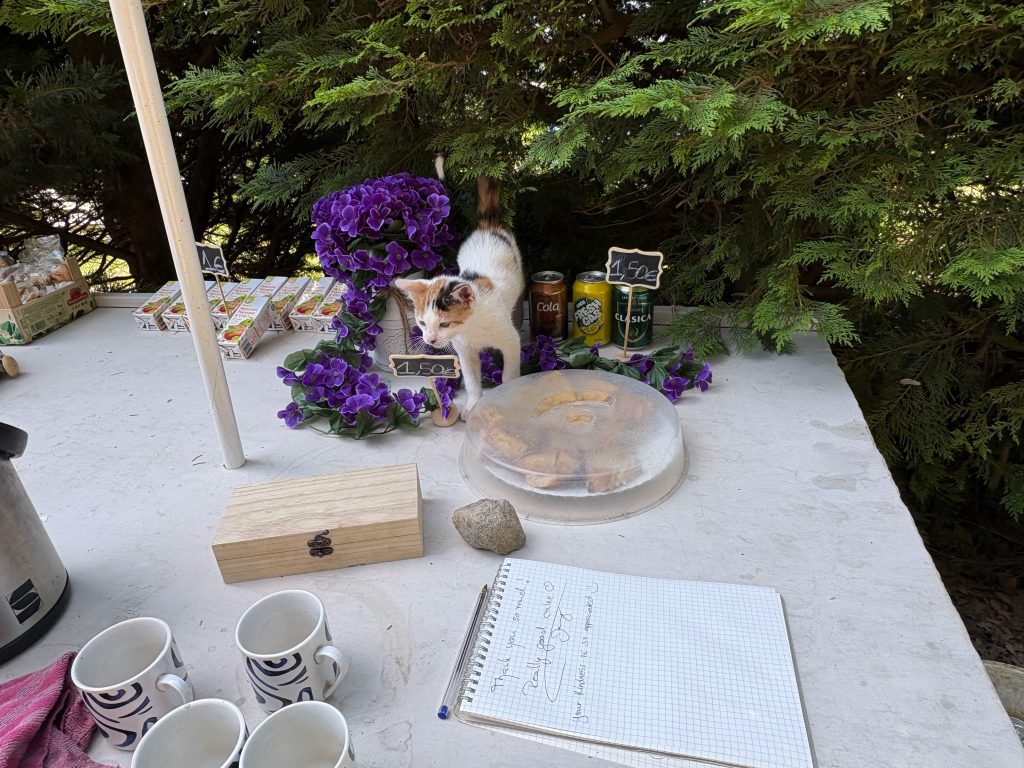
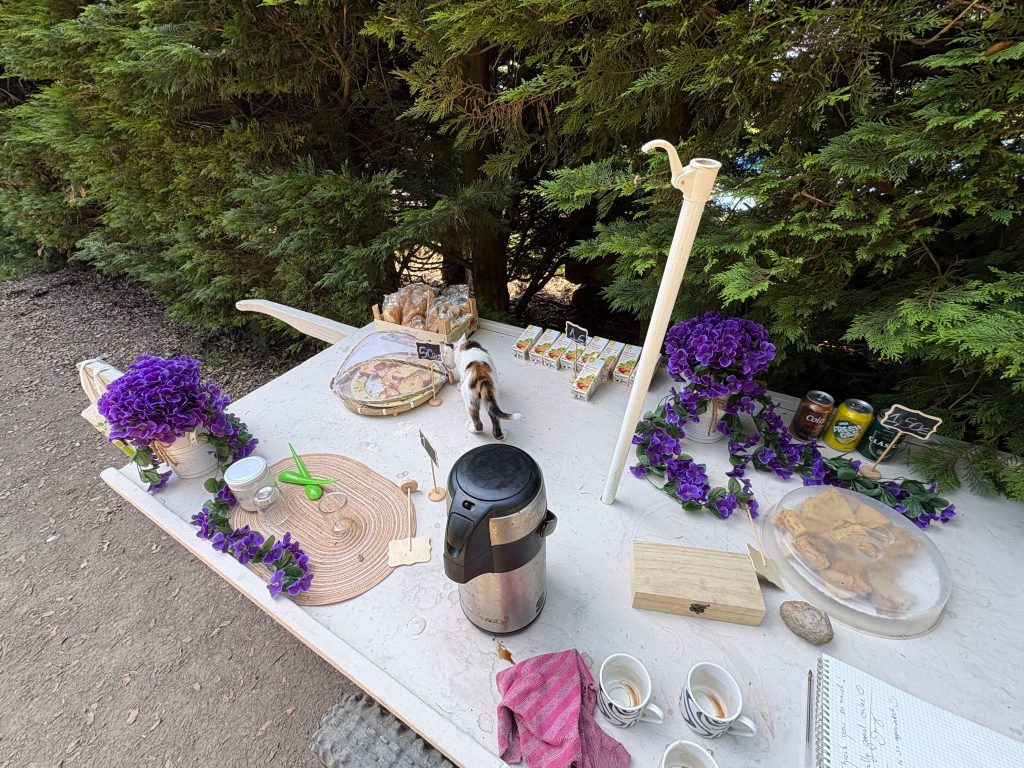
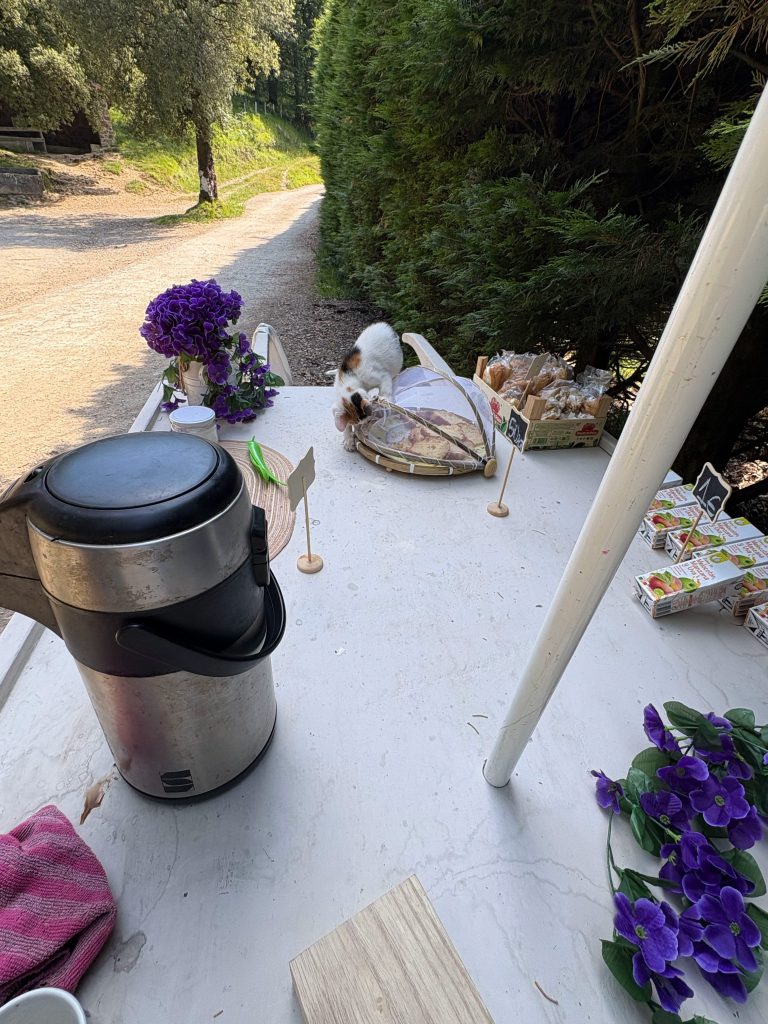
There was a lovely snack table in front of someone’s home. I didn’t have a lot of small euros and the coffee glasses were all used. I dropped a couple of euros and ate a slice of Spanish tortilla. The local kitty found ways to steal the pilgrim offerings and was lifting or poking through food covers. It was cute.
About 5K from completing the day, I found some history plaques along the trail that told of Spanish Civil War history: the battle Akarregi-Egixarre from October 21, 1936 had taken place right where I walked. The plaque told of some soldiers who fought to defend the Republic, and democracy, and who had died on the field had to be left due to proximity to the enemy Nationalist brigades. A practice I tried on several occasions was to imagine long ago histories, people, places that stood on the land before me… to imagine stories of ancient eras, medieval times, or, the Spanish Civil War. This came from Paulo Coelho’s book, The Pilgrimage.1 I paid homage and I teared up, getting emotional for many reasons and one of which was my study of the conflict and now coming into intimate contact. I had a similar emotional experience when walking through forests in Poland that had been sites of mass executions of Jewish people. Nature, whether the trees or the soil, hold human stories, including pain and suffering, I believe.
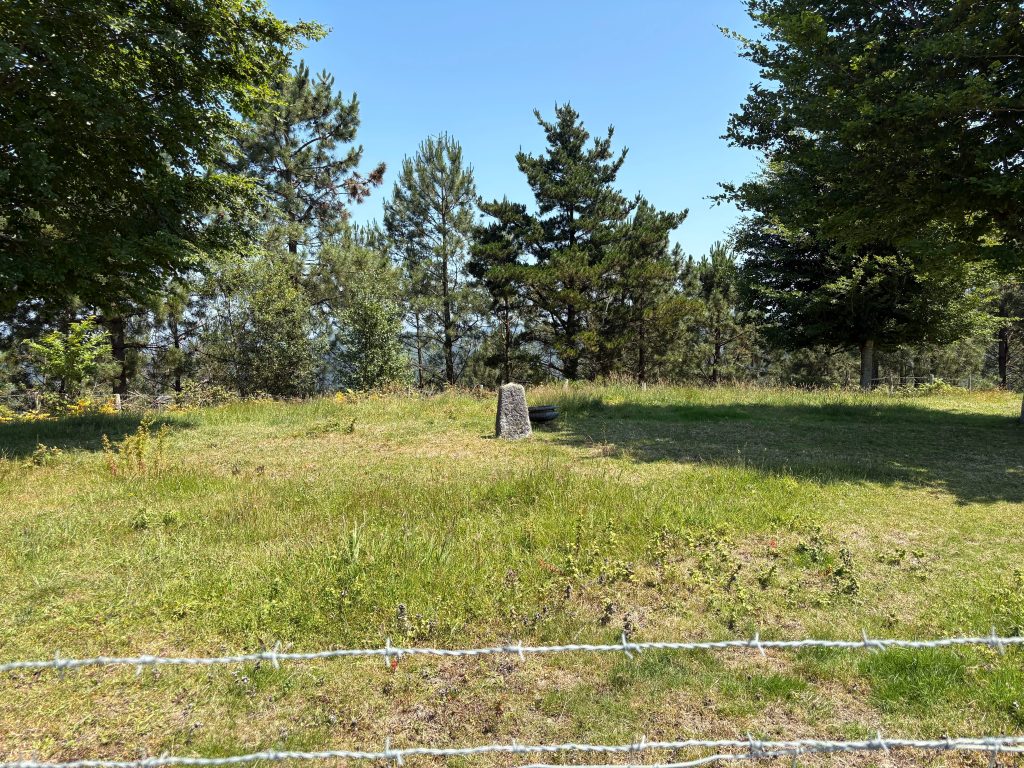
Battle site commemoration
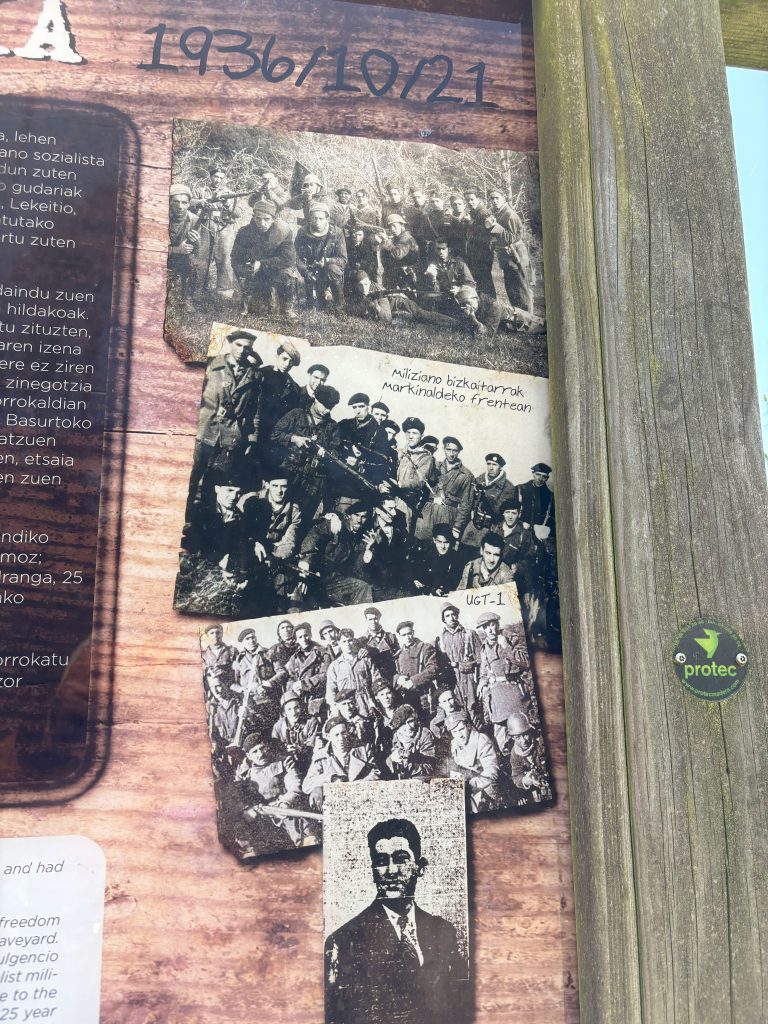
The Basque region, as well as neighboring Cantabria and Asturias, held out against the fascist and military led coup for the first year of the civil war. Industrialization had made the labor unions strong in these regions and especially Bilbao, so there were strong socialist and trade union parties that supported the Popular Front. While the region was torn in sympathies, alliances, and interests, Basque support for the Republic was due in large part to better protection of their autonomous rights over the alternative: narratives of a Spanish unity and nationalism coming from the more conservative coalition led by fascists and the Church. I was only 15 miles away from Gernika (Guernica), a small town made famous by Picasso’s painting lamenting the brutality of twentieth-century war. More on this in my next post.
The descent was very long, but the surface was even so it was tolerable. Yesterday going down into Deba was very dodgy and I didn’t know how to access the supposed elevator I heard about on the podcast and I quieted my internal complaints when I was passed a couple of times by local runners.
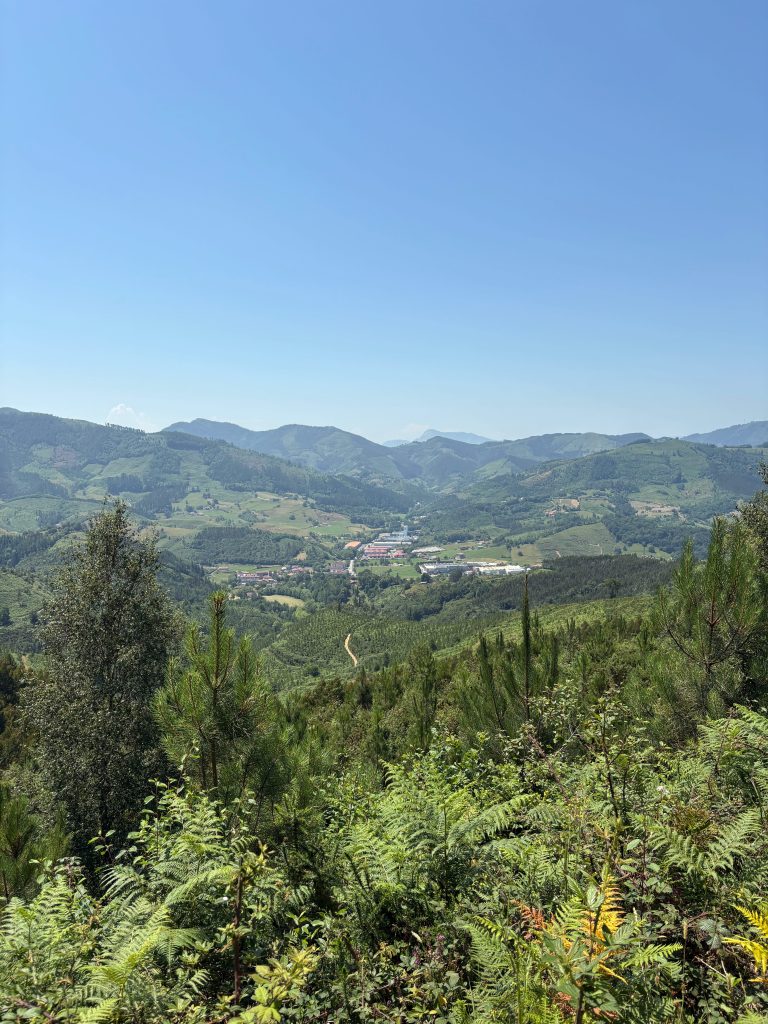
Last, big descent for the day. Usually I felt relief first spotting my destination town… this felt daunting
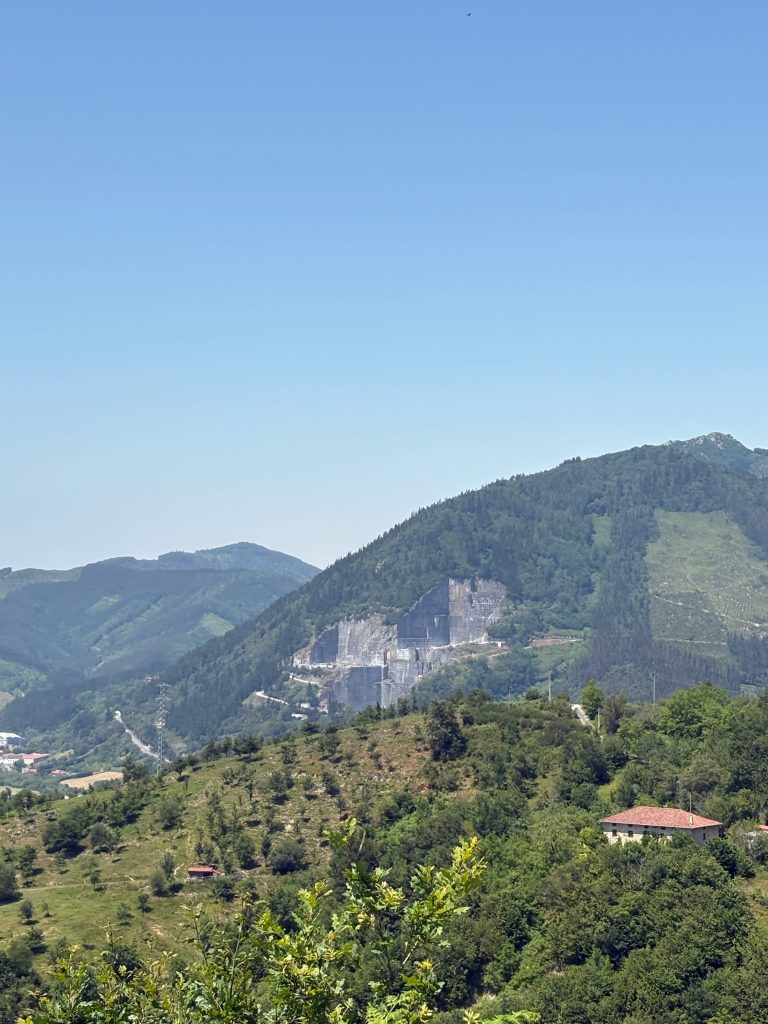
Why today didn’t feel easy
I stayed at a pensión a couple of miles outside of Markina-Xemein, in Erbera. So did Marta. And we ended up sharing a 2-bedroom flat actually. The woman who checked us in was very sweet, and I was very sweaty. I am sure they are used to hikers coming in all sorts of physical, mental, and emotional states. She complimented my Spanish. There was very little in the town. A bar with no food, a grocery store that was more of a convenient shop, and one restaurant that seemed to be closing and had exactly three options to choose from. I had a burger with fries. Marta, a vegetarian, tried ordering a salad and potatoes. The salad came with tuna, which we learned is commonly the default for any salad. There was a father and son from Florida and we had dinner with them too.
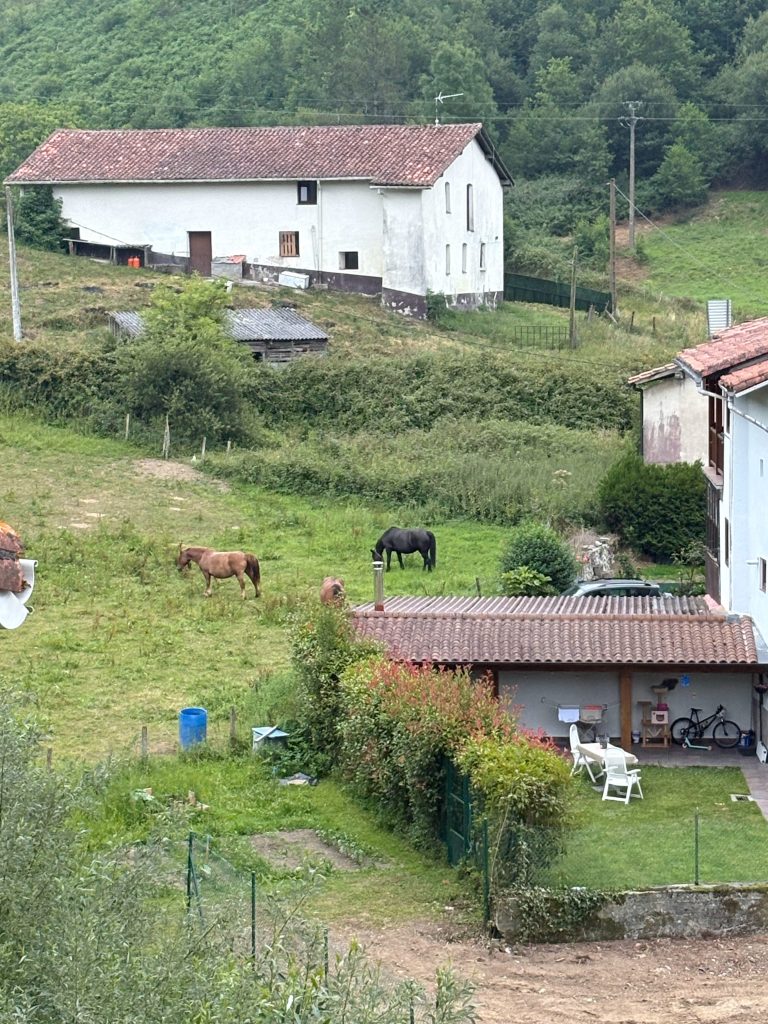
View from bedroom… went to bed with the noise of singing toads, rather it was more like croaking that sounded like dying hogs
My bedroom window did not face the sun, and I didn’t realize there was a clothesline available. The next morning some clothing items hung from my backpack again; others were shoved into a plastic bag damp.
Is there anything in the history of Spain that you find most interesting or useful to understanding world history?
Peace and happy hiking,
Maria
- This is worth the read, but The Alchemist is my favorite and was inspired by Coelho’s earlier The Pilgrimage ↩︎

