I stayed three total nights in San Sebastián and on the third day commenced my first hike without having to worry about carrying or transferring my bag. The beaches are fun and beautiful, with surfers flocking to the Gros side of the city. The pintxos scene is lively yet intimidating as a solo traveler. On day 1, exhausted from a sleepless flight and unable to check-in until 3PM, I grabbed brunch at Simona Specialty Coffee Club, there was a line to get in! My backpack shell patch alerted the man sitting across from me to come over for chat. He had done parts of the camino and now was driving around and doing day hikes. I could tell he really wanted to talk for a while, so I made a break for it to nap on the beach for a bit. The quick and dramatic tide rose and awoke me. I made my way to the Airbnb hostel. That night I walked around looking for an in at a pintxos bar, but it was quite packed and difficult. I ended up with very uninspiring ones. The next night, I was grateful for the Airbnb adventures pintxos tour, and my guide avoided the Old Town traps for the more laid back and local Gros scene.
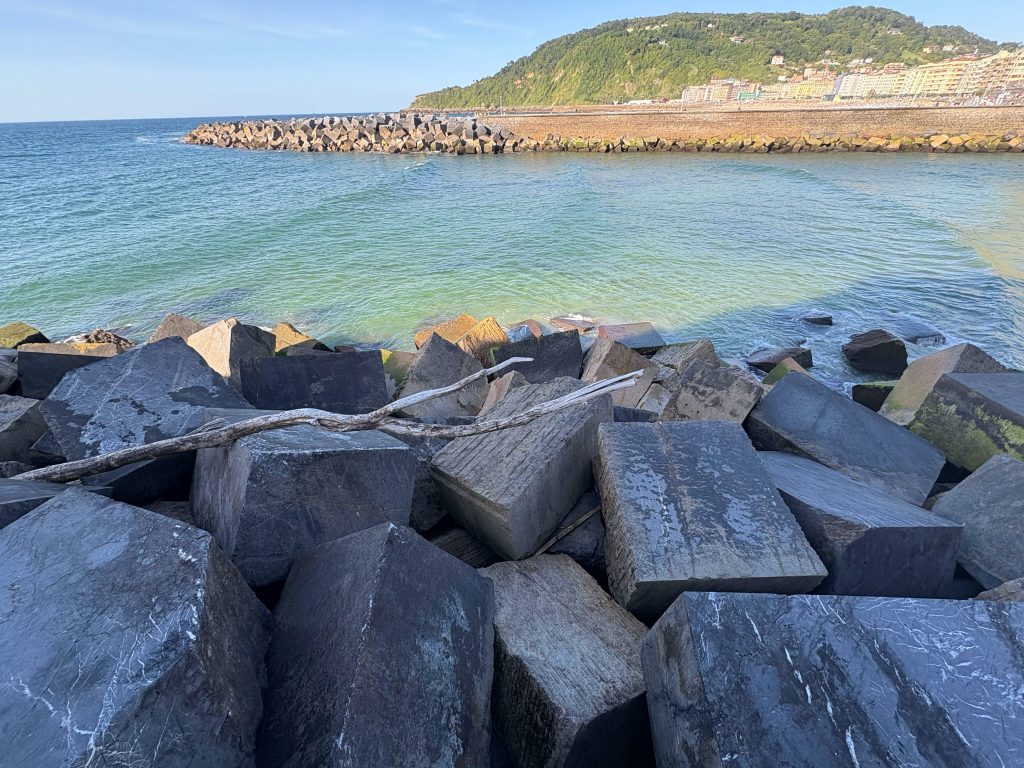
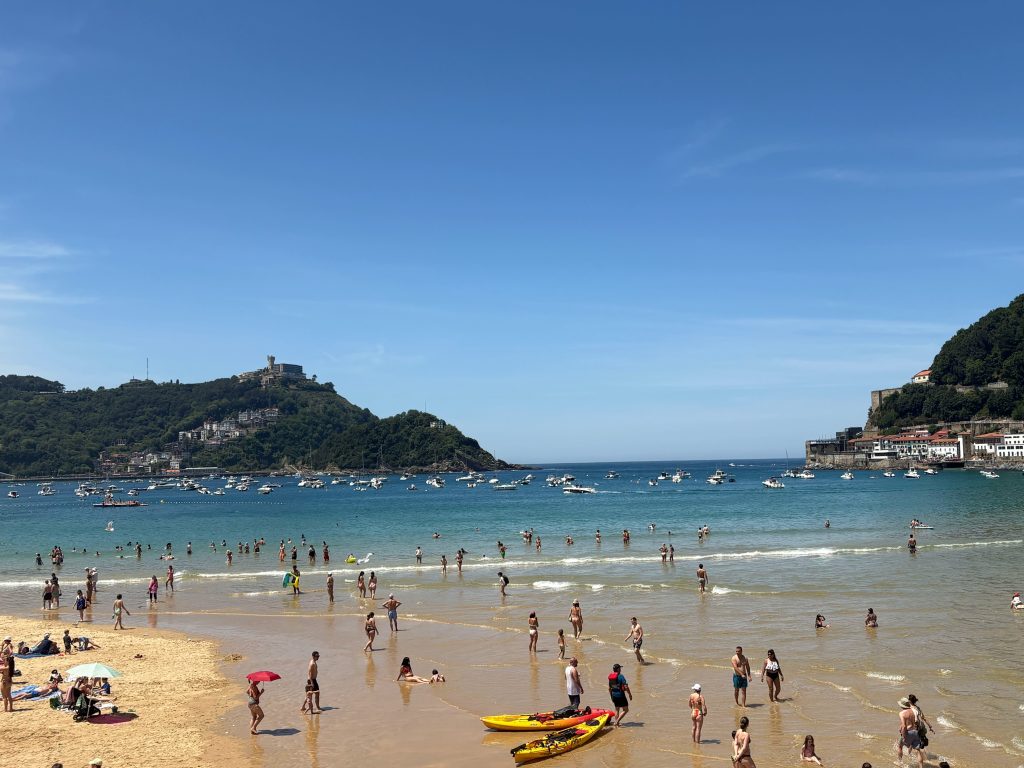
Pictured above: Playa de la Concha
The next day, before my pintxos tour, I visited San Telmo Museoa (STM), the art museum which included a lot of history. The temporary exhibit, “Black Goya, Black Motherwell: Eighty Disasters and an Abyss,” was Francisco Goya’s works The Disasters of War and Robert Motherwell’s Goya-inspired painting. Goya’s prints were created around Napoleon’s invasion of Spain and Motherwell’s piece was a canvas smothered in layers of black paint, with a corner of white exposed. He was reacting to both Goya and to the Spanish Civil War (1936-1939) and the Hungry Years that followed. These depths of despair were lightened by the permanent exhibit’s celebration of Basque industrialization in the 20th century. The Basque and Catalan regions of Spain are the country’s most industrialized, in the Basque region this was largely thanks to ore deposits of iron and lead, and therefore, made calls for independence more contentious and met with fierce disapproval by Madrid.
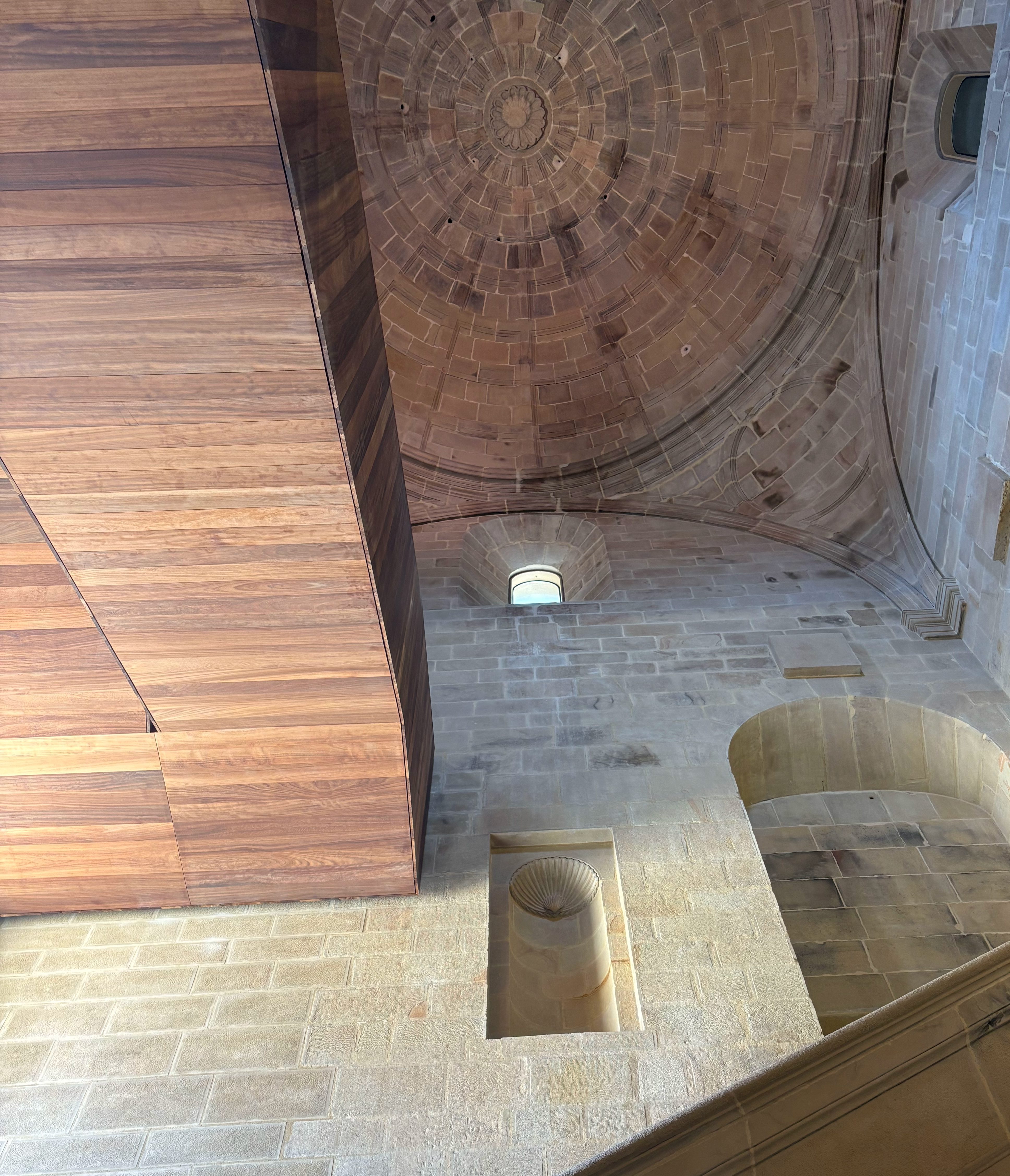
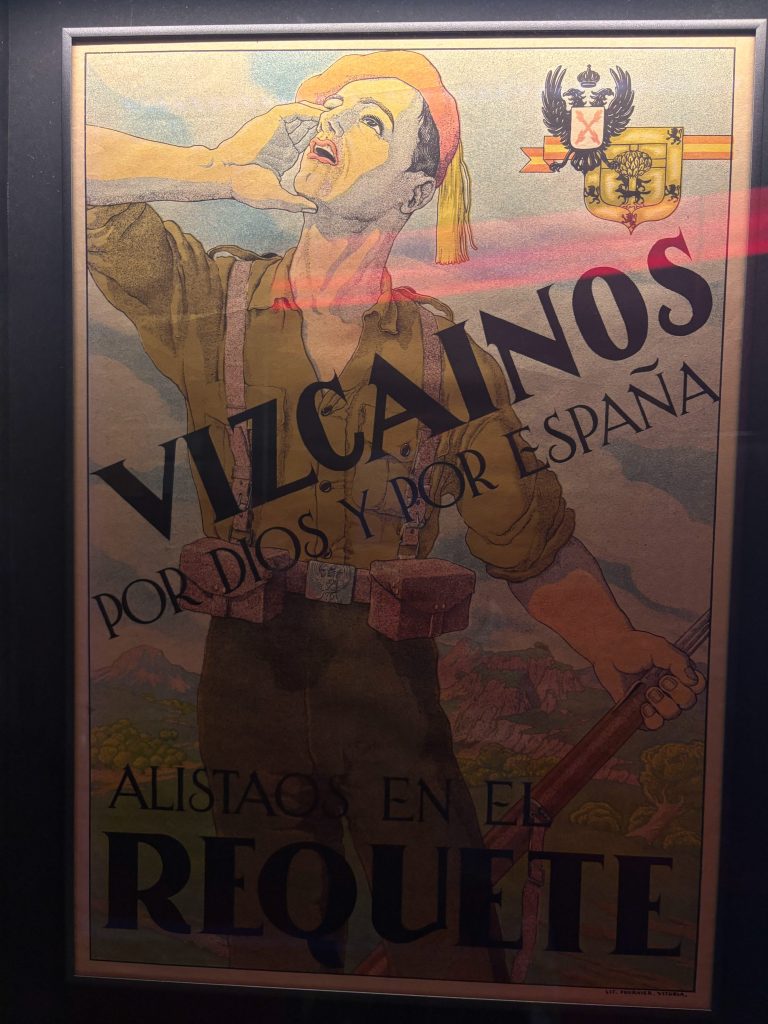
Pictured above: Inside stairwell at STM and Pro-Nationalist Civil War propaganda poster. Popular Front posters published and numerous in the Basque region during the Civil War also dotted the history exhibit.
All of the pintxos tour dishes were wonderful, as well as the company of three Norwegian women on holiday together (they had met in the early 2000s working at Epcot and two of which insisted if I ever visit Norway to contact them), but the star was the Basque cheesecake and the interesting Vermouth experience. We learned about the Basque white txakoli and how due to the less sunny/warm climate it was considered a poorer wine option – put up against the darling Rioja. Because of this, most practiced aeration to naturally add bubbles and render the beverage more agreeable. Pouring like Asturian cider, lifting your arm as high as it can go, maintaining a steady stream into your glass, was a fun test. Many of us failed to capture all contents into our desired vessel! I would see this popular white in Bilbao, as well.
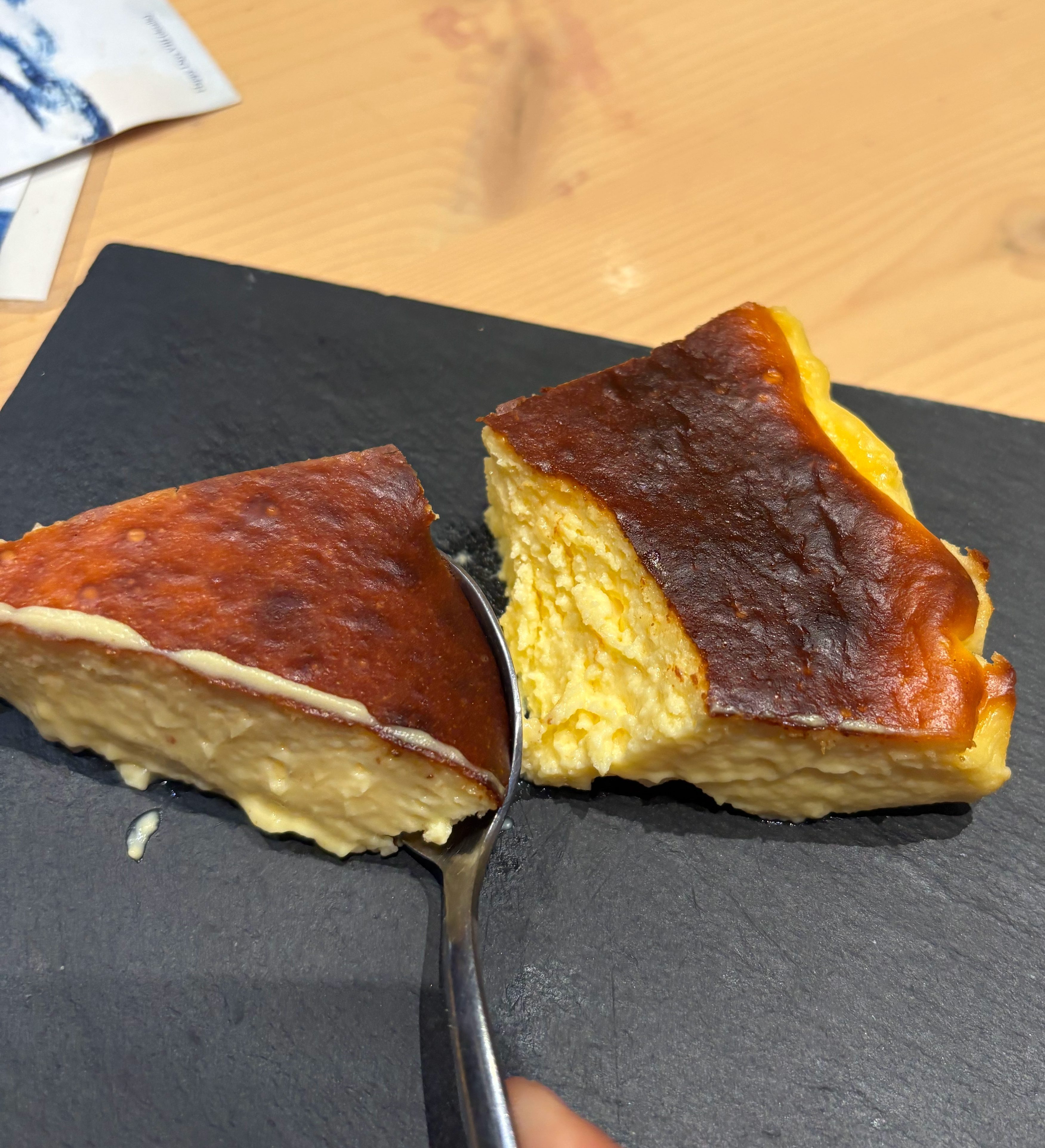
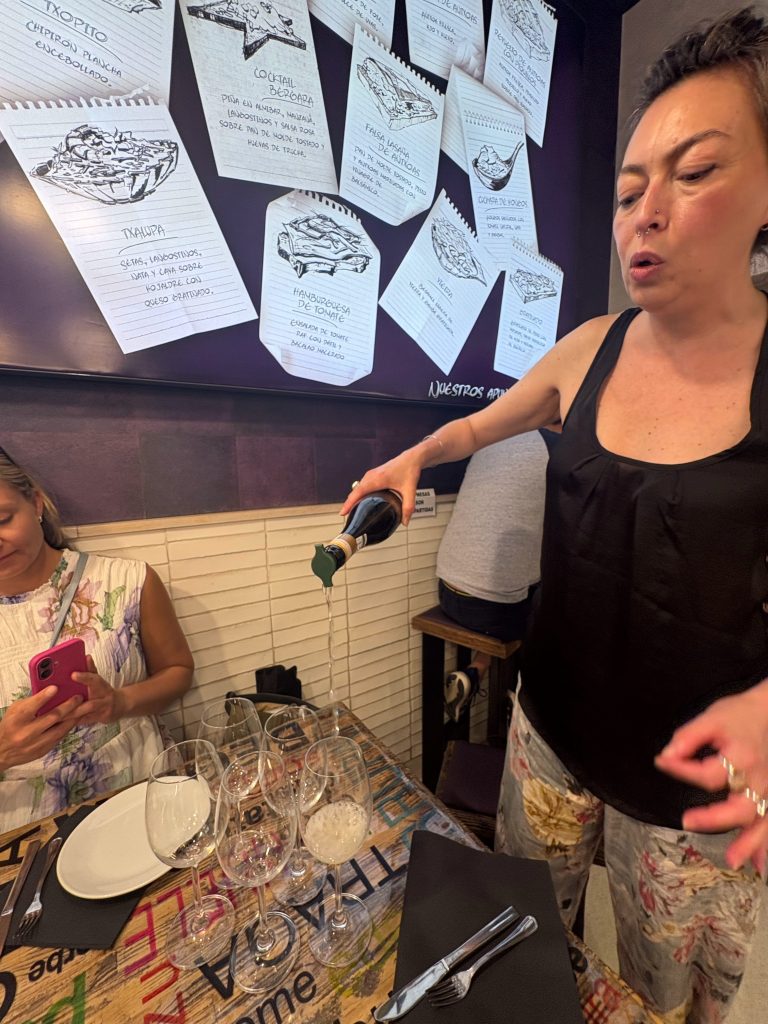
Pictured above: Basque cheesecake (while I would also have amazing cheese in the cheese-celebrated Galician region, Basques do cheesecake right!). My pintxos guide, Valerik of IG’s The Insider San Sebastian (theinsiderdonosti) aerating our txakoli.
My tour guide was from Argentina but of Basque descent. She confirmed what I had read in graduate school, that many Basques (and I knew Galicians, as well) immigrated to South America in the late 1800s. Argentina was a popular destination of these Spanish “cousins.” (cite Cousins and Strangers) She also appreciated when I corrected myself about the language and used “Euskera” or “Euskara” rather than the Spanish “Vasco” or English “Basque.” I also noticed no Spanish flags while in most cities or towns in the region. The Basque red, white, and green colors dominated; colors that mimic the white walled and red pitched roof homes dotting the lush green coastal mountains. Another flag I saw quite often was that of Palestine. More on this later!
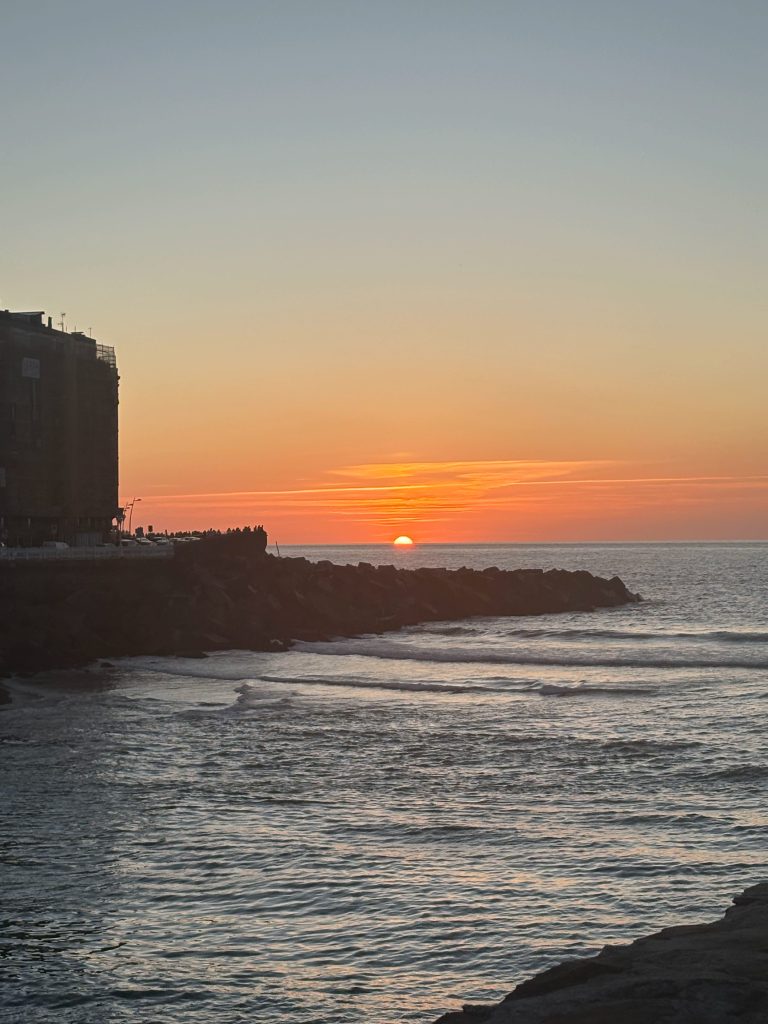
Quaint and pedestrian friendly, staying in San Sebastián’s Old Town was nevertheless a terrible decision. Joyous party-goers wrecked havoc until 6 am making sleep impossible. It was also oppressively hot and opening windows magnified music and hollers. Due to this, my first day of hiking with the plan to take the Euskotren from San Sebastián to Irún early in the morning then hike back, was less than ideal. I did not get to the Irún Colon metro stop until 9am to begin a 16 mile day with almost 3K elevation gain. Those initial steps to find coffee and my first yellow arrow confirmed my worry; it was HOT already.
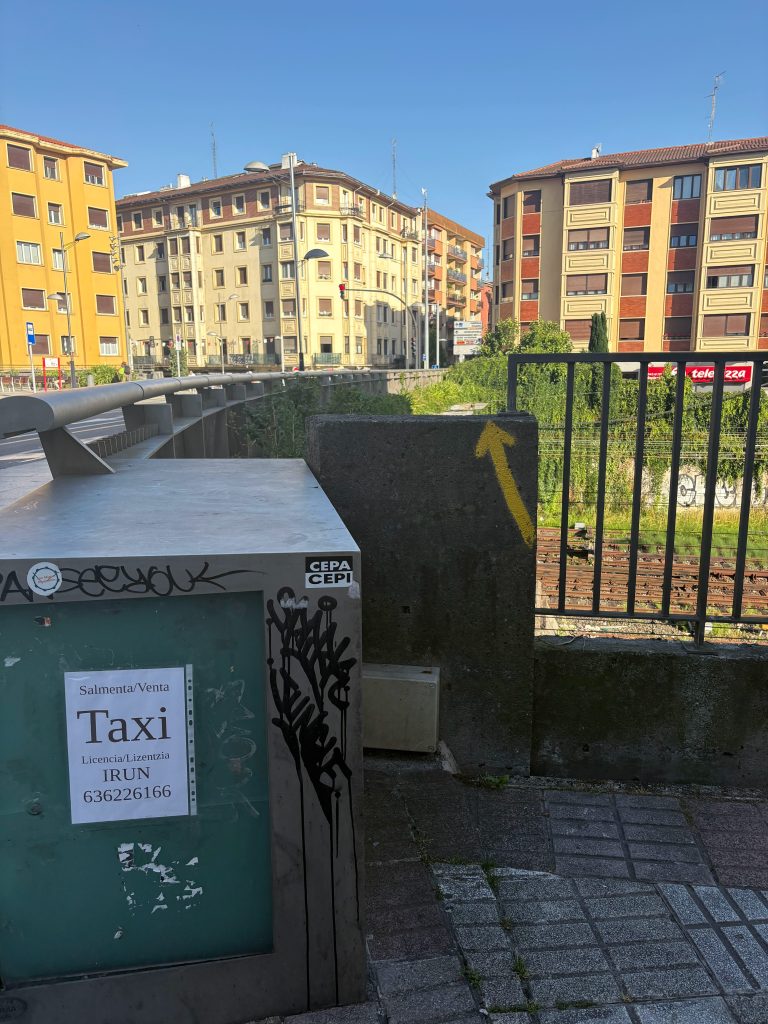
Pictured above: First camino marker in Irún
What’s your favorite city in Spain and why?
Peace and happy hiking,
Maria
 Maria Labbato, PhD